Ελληνικά
Your cart
There are no more items in your cart
 Educational Products
 School Equipment
 Stationery
 STEM - Robotics - Programming
 Electronics
 Educational Toys & Construction Kits
 Tools & Adhesives
 Craft Materials
 Art Supplies

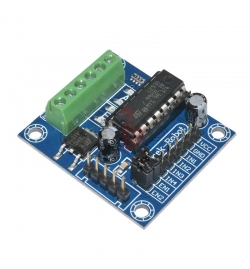
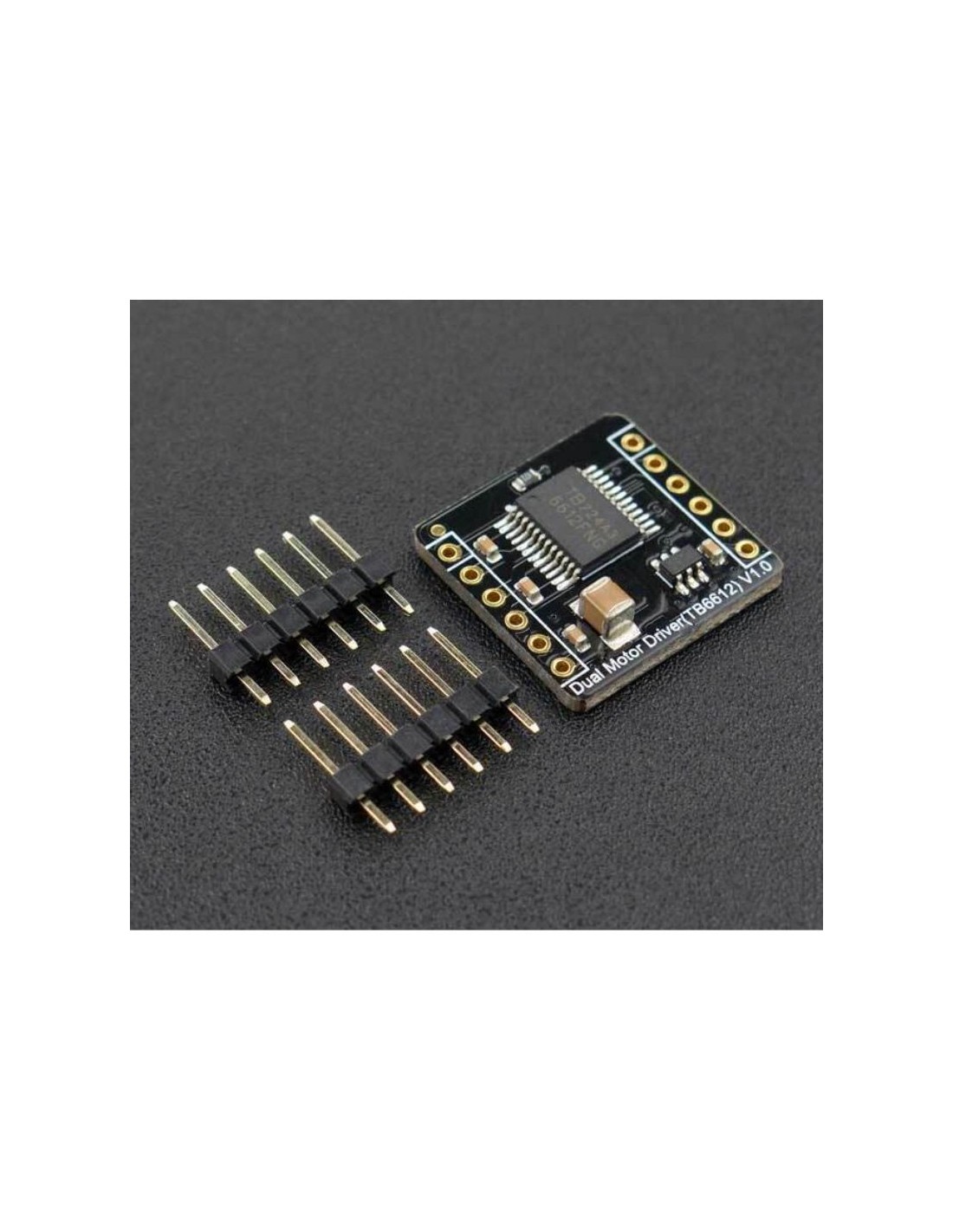
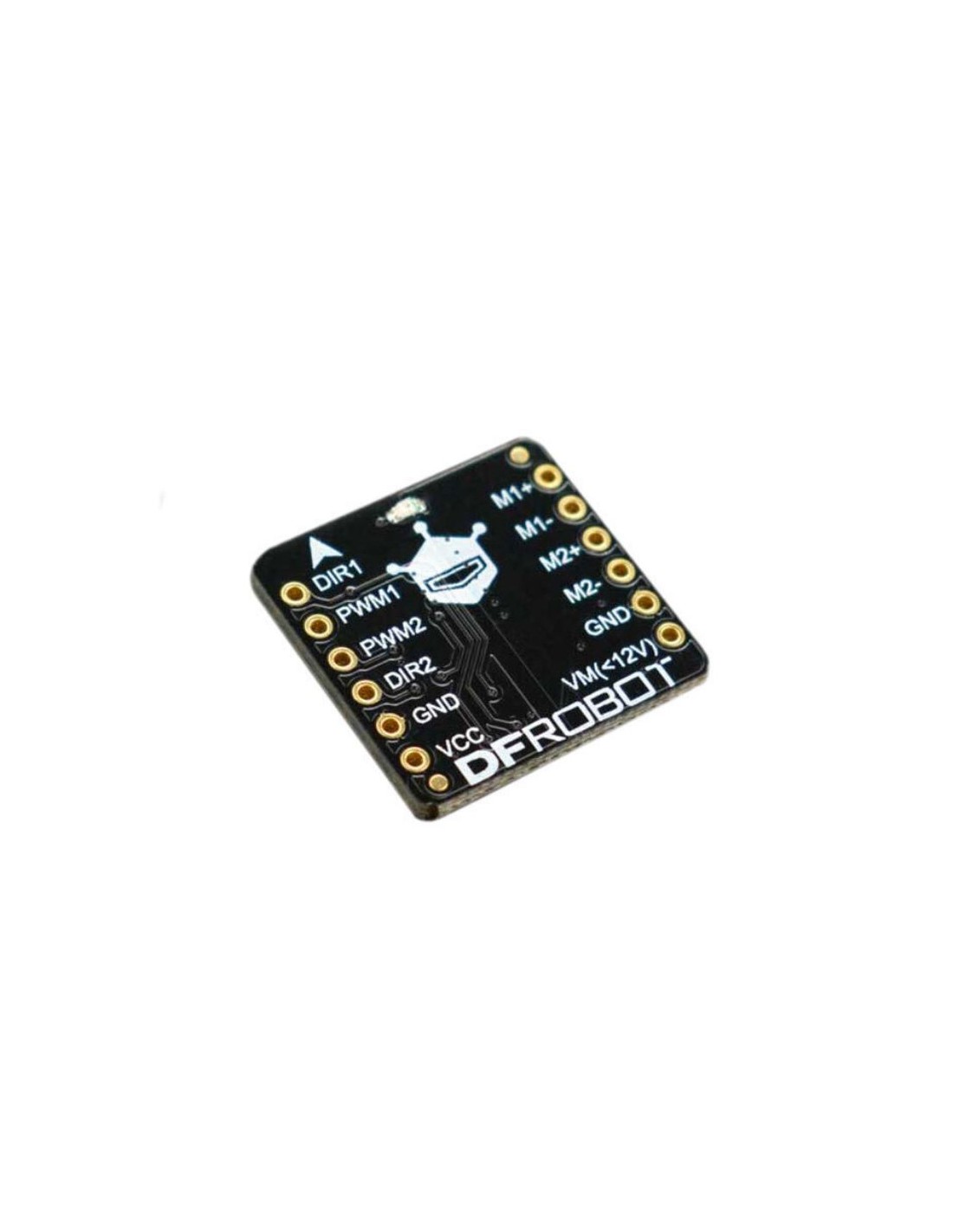
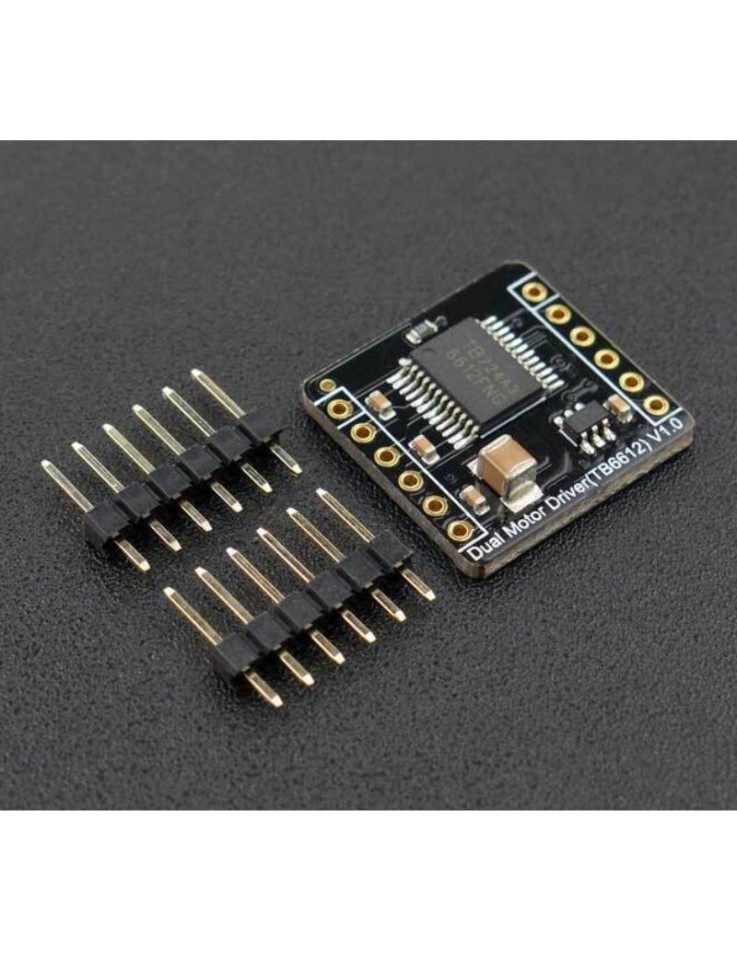
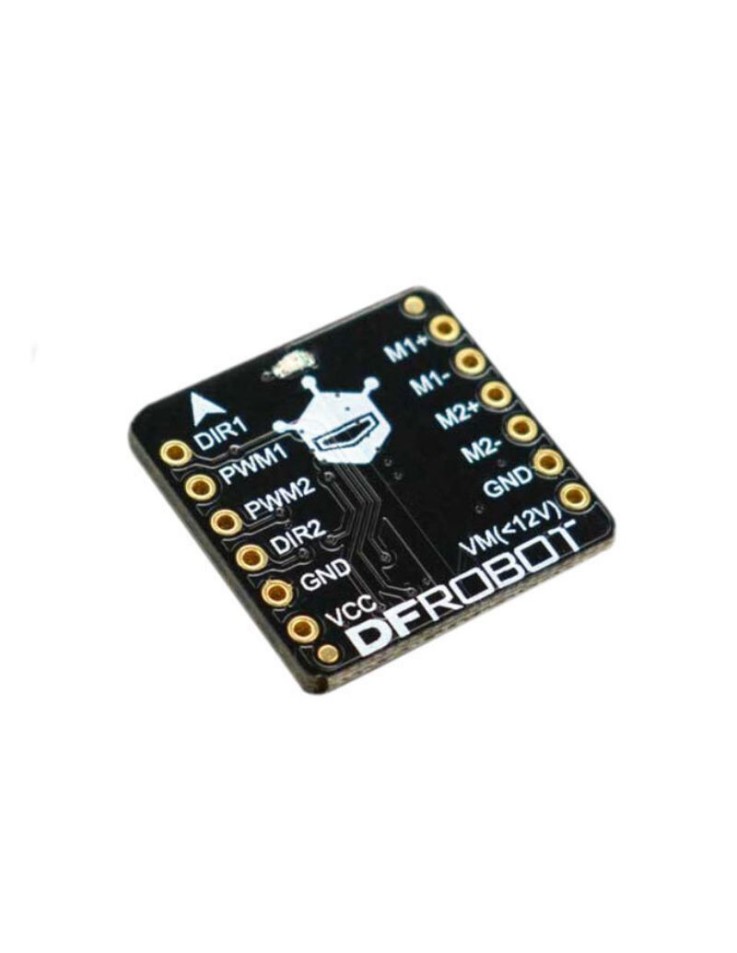
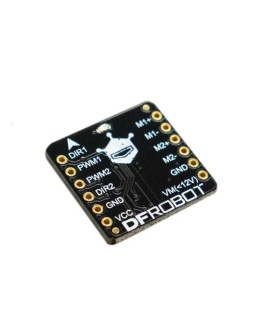
TB6612FNG DRI0044 by DFRobot — a compact Dual H-Bridge motor driver delivering 1.2A per channel for two DC motors or one stepper. MOSFET-based design runs cooler and more efficiently than traditional L298N modules, with full PWM speed and direction control.
The DFRobot TB6612FNG Motor Driver (MPN: DRI0044) is a compact, high-efficiency Dual H-Bridge module built around the Toshiba TB6612FNG IC. It enables low-power microcontrollers — including Arduino, ESP32, and Raspberry Pi — to safely drive two DC motors independently or one bipolar stepper motor, handling the high current demands that microcontroller GPIO pins cannot supply directly.
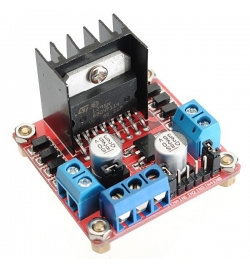
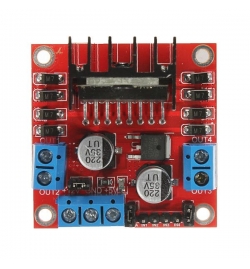
Unlike the bulky L298N which relies on bipolar transistors and wastes energy as heat, the TB6612FNG uses MOSFET switching technology, resulting in a dramatically lower voltage drop, minimal heat generation, and superior power efficiency — making it the preferred choice for battery-powered robots and compact embedded motion systems.
| PIN | Symbol | Description |
|---|---|---|
| 1 | PWMA | PWM speed control input — Motor A |
| 2 | AIN1 | Direction control input 1 — Motor A |
| 3 | AIN2 | Direction control input 2 — Motor A |
| 4 | STBY | Standby pin — pull HIGH to enable both channels |
| 5 | BIN1 | Direction control input 1 — Motor B |
| 6 | BIN2 | Direction control input 2 — Motor B |
| 7 | PWMB | PWM speed control input — Motor B |
| 8 | VM | Motor power supply voltage |
| 9 | VCC | Logic supply voltage (microcontroller side) |
| 10 | GND | Common ground |
| 11 | AO1 / AO2 | Motor A output terminals |
| 12 | BO1 / BO2 | Motor B output terminals |
Wiring note: Connect PWMA, AIN1, AIN2, BIN1, BIN2, PWMB, and STBY to your microcontroller's digital/PWM GPIO pins. Connect VM to your motor supply and VCC to your logic supply (3.3V or 5V depending on your MCU). Always share a common GND between the motor supply and the microcontroller.
| Parameter | Value |
|---|---|
| IC / Driver | Toshiba TB6612FNG |
| Channels | 2 × DC motor or 1 × Bipolar Stepper |
| Continuous Output Current | 1.2A per channel |
| Control Interface | PWM + Digital Logic |
| Compatible Logic Levels | 3.3V / 5V |
| Driver Technology | Dual H-Bridge MOSFET |
| Control Modes | CW, CCW, Short Brake, Stop, Standby |
| Brand | DFRobot |
| MPN | DRI0044 |
Q: Can the TB6612FNG DRI0044 replace an L298N in my existing project?
A: Yes, in most cases. The TB6612FNG offers equivalent dual H-Bridge functionality with lower heat output and a smaller footprint. Pin mapping differs, so you will need to update your wiring and potentially adjust your code logic signals.
Q: Can I control this module directly from an ESP32 at 3.3V?
A: Yes. The TB6612FNG accepts 3.3V logic-level signals, making it fully compatible with ESP32, ESP8266, and Raspberry Pi GPIO without any level shifter.