- Home
- Catalogues
- List of Supervising Constructions for High School - High School 2025-2026
- Catalogue of Science and Technology Aids 2025-2026
- Design & Technology Catalogue Primary Schools 2024-2025
- Catalogue of Science and Technology Aids 2024-25
- Catalogue of Science and Technology Aids 2023-24
- Christmas Crafts Set
- Nursery Schools Catalogue 2022-2023
- Nursery Schools Catalogue 2020-2021
- Nursery Schools Catalogue 2018-2019
- Happy and Creative Hands
- Jobs Category
- About us
- FAQ
- Terms and conditions of use
- Privacy Policy
- Cookies Policy
- Payment Methods
- Shipping Methods
- Returns Policy
- Payment Response
- Registration Successful
- Shipments to Greece
- New Service Point
- Teacher Registration
- Box Now Shipping Service
- 40 years Antoniadis
- Catalogues
- Catalogues
- About us
- Payment Methods
-
Educational Products
-
School Equipment
- All
- Write 'N' Wipe Boards
- White Magnetic Boards
- Board Erasers & Cleaners
- Interactive Boards
- Cork Boards
- Boards Paper Roll
- Talking Points
- Measuring Instruments
- Rotary Trimmer & Guillotine Machines
- Binding Machines
- Laminators
- Maps
- Literacy
- Time
- Presenters
- Music Instruments
- Batteries
- USB Memory Sticks
- Pocket Charts
- Various
-
Stationery
-
STEM - Robotics - Programming
-
Electronics
-
Educational Toys & Construction Kits
- All
- Mechanics
- Robotics
- Coding
- Simple Circuit Kits
- Science
- Green Science
- Planets
- Dinosaurs - Volcanos
- Animals
- Lenses
- Logic / Understanding
- Card & Board Games
- Rubik's Cubes
- Puzzles
- Magnetic Boards
- Hama Beads
- Painting Sets
- Craft Sets
- Creative Hands
- Soft Play Dough
- Fridge Magnets
- Wooden toys
- Baby Toys
- Gadgets
- Construction "Antoniadis"
- Seasonal
- Birthday Gifts
- Gift Vouchers
-
Tools & Adhesives
-
Craft Materials
- All
- Resin Art, Casting & Sculpting
- Decoupage & Mixed Media
- Items for Decoration
- Model Making & Mockup Supplies
- Creation Materials
- Decoratives
- Paints - Colours
- Mediums & Auxiliaries
- Canvases & Canvas Panels
- Clocks & Accessories
- Cards & Papers
- Fabrics
- Scrapbooking - Papers
- Powertex
- Quilling
- Seasonal
- All
- Acrylics
- Metallic - Pearl
- Chalk Paints
- Oil Paints
- Watercolours - Temperas
- Glass paints
- Fabric Paints
- Pouring Paint Sets
- Face painting
- Lasur Paints
- Chalkboard
- Pencils
- Chalks
- Markers
- Pastel-Crayons
- Outliners
- Alcohol Inks
- Spray
- Pigments for Liquid Glass
- Pigments
- Coloring Books
- Painting by numbers
- Paint Palettes and Containers
-
Art Supplies
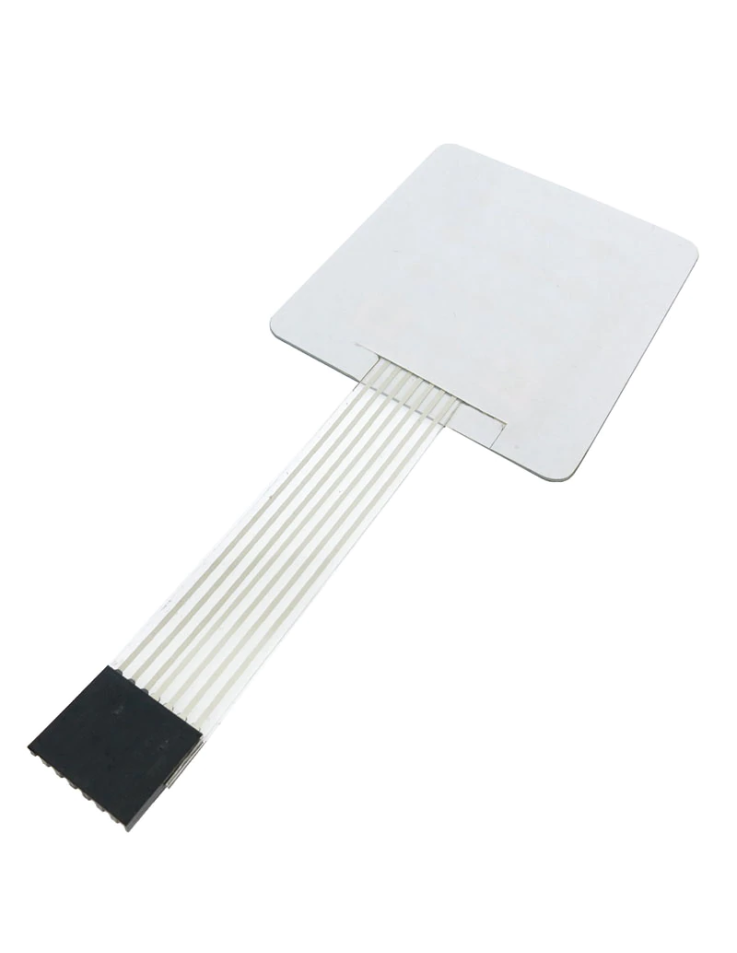
Membrane 3x4 Matrix Keypad
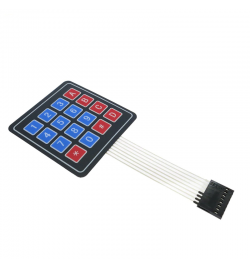
The Membrane 3×4 Matrix Keypad is a compact, thin, and flexible 12-button input device ideal for adding user input to embedded projects. Arranged in a classic telephone-style 3-column × 4-row grid, this fully passive keypad requires no power supply of its own — it operates entirely via GPIO scanning, needing just 7 microcontroller pins (3 columns + 4 rows) to read all 12 keys. Its self-adhesive backing makes it easy to mount on enclosures, project boxes, or panels, while the ultra-thin 0.8mm profile ensures a clean, professional look.
Key Features
- 12-Key Matrix Layout (3×4): Telephone-style grid (digits 0–9, *, #) — covers the most common input scenarios for embedded UIs
- Passive Matrix Interface: No VCC or GND power pins required — reduces wiring complexity and GPIO usage vs. individual button arrays
- 7-Pin Dupont Connector (2.54mm pitch): Standard 0.1" spacing — plugs directly into a breadboard or Arduino header without adapters
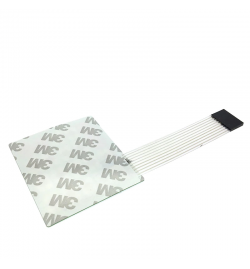
- Self-Adhesive Backing: Peel-and-stick mounting — attach permanently to any flat surface for clean project integration
- Ultra-Thin Membrane Construction (0.8mm): Flexible, lightweight design — fits in space-constrained enclosures where mechanical buttons cannot
- 1,000,000 Cycle Life Expectancy: Rated for one million key presses — reliable for long-term deployed projects
- Contact Bounce ≤ 5ms: Low bounce time — simplifies debounce logic in firmware
Pinout & Wiring
The keypad outputs 7 pins via its Dupont connector. The standard row/column assignment (from pin 1 to pin 7) for a 3×4 keypad is as follows:
| Pin | Symbol | Description |
|---|---|---|
| 1 | R1 | Row 1 (top row: 1, 2, 3) |
| 2 | R2 | Row 2 (4, 5, 6) |
| 3 | R3 | Row 3 (7, 8, 9) |
| 4 | R4 | Row 4 (bottom row: *, 0, #) |
| 5 | C1 | Column 1 (left: 1, 4, 7, *) |
| 6 | C2 | Column 2 (center: 2, 5, 8, 0) |
| 7 | C3 | Column 3 (right: 3, 6, 9, #) |
Wiring note: Connect the 7 pins to any 7 available digital GPIO pins on your microcontroller. On Arduino, use the Keypad library (by Mark Stanley) — define your row and column pin arrays in code and the library handles all scanning and debounce logic automatically.
Compatibility
- Arduino UNO / Nano / Mega: Full compatibility — use 7 digital GPIO pins with the standard Arduino Keypad library
- ESP32 / ESP8266: Compatible — use 3.3V-tolerant GPIO pins; passive device works at any logic level
- Raspberry Pi (via GPIO): Compatible with Python
keypadorRPi.GPIOlibraries - STM32 / ATmega / Any microcontroller with 7 GPIO pins: Compatible — fully passive, logic-level independent
Typical Applications
- PIN entry and access control systems (door locks, safes)
- Menu navigation in Arduino LCD display projects
- Numeric input for DIY calculators or data loggers
- Password-protected relay or alarm systems
- Interactive kiosk or vending machine prototypes
- Educational embedded systems labs and electronics courses
Technical Specifications
| Parameter | Value |
|---|---|
| Interface / Protocol | Passive matrix (4 rows × 3 columns), direct GPIO scanning |
| Number of Keys | 12 (3×4 grid) |
| Connector | Dupont 7-pin, 2.54mm (0.1") pitch |
| Max Circuit Voltage | 35V DC |
| Max Circuit Current | 100 mA |
| Insulation Resistance | 100 MΩ @ 100V |
| Dielectric Withstand | 250 Vrms (60Hz, 1 min) |
| Contact Bounce | ≤ 5 ms |
| Life Expectancy | 1,000,000 closures |
| Operating Temperature | -20°C to +40°C |
| Mount Style | Self-adhesive backing |
| Pad Dimensions | 69.2 × 76.9 × 0.8 mm |
| Cable Length | ~86 mm (including connector) |
FAQ
Q: Do I need pull-up or pull-down resistors to use this keypad?
A: When using the Arduino Keypad library, internal pull-up resistors are enabled automatically via INPUT_PULLUP. No external resistors are required — the library handles this in software.
Q: Can I detect multiple simultaneous key presses (rollover)?
A: Standard 4×3 matrix scanning without diodes does not reliably support multi-key (n-key rollover) detection. For single key input (which covers the vast majority of use cases), it works perfectly.
Package Contents: 1 × Membrane 3×4 Matrix Keypad with pre-attached Dupont 7-pin connector cable (~86mm)
⚠️ Note: This is a fully passive device — there are no VCC or GND power pins. Do not apply voltage directly across the connector pins without a current-limiting circuit.