Ελληνικά
Your cart
There are no more items in your cart
 Educational Products
 School Equipment
 Stationery
 STEM - Robotics - Programming
 Electronics
 Educational Toys & Construction Kits
 Tools & Adhesives
 Craft Materials
 Art Supplies
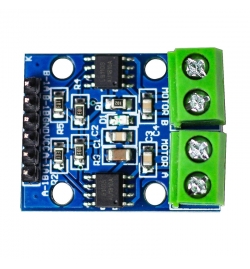
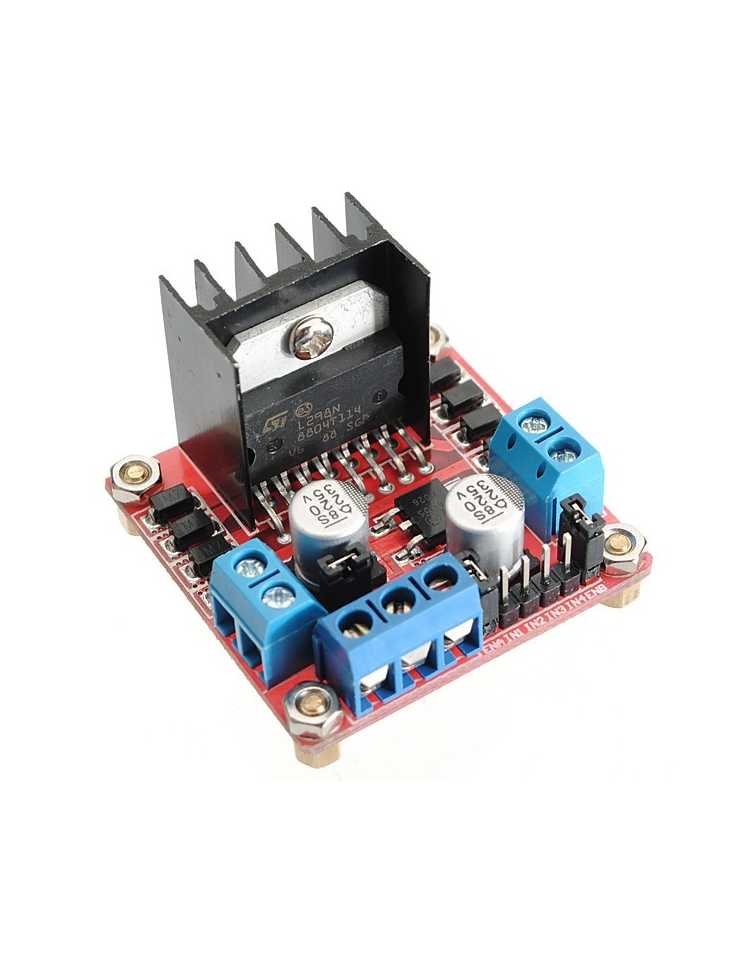
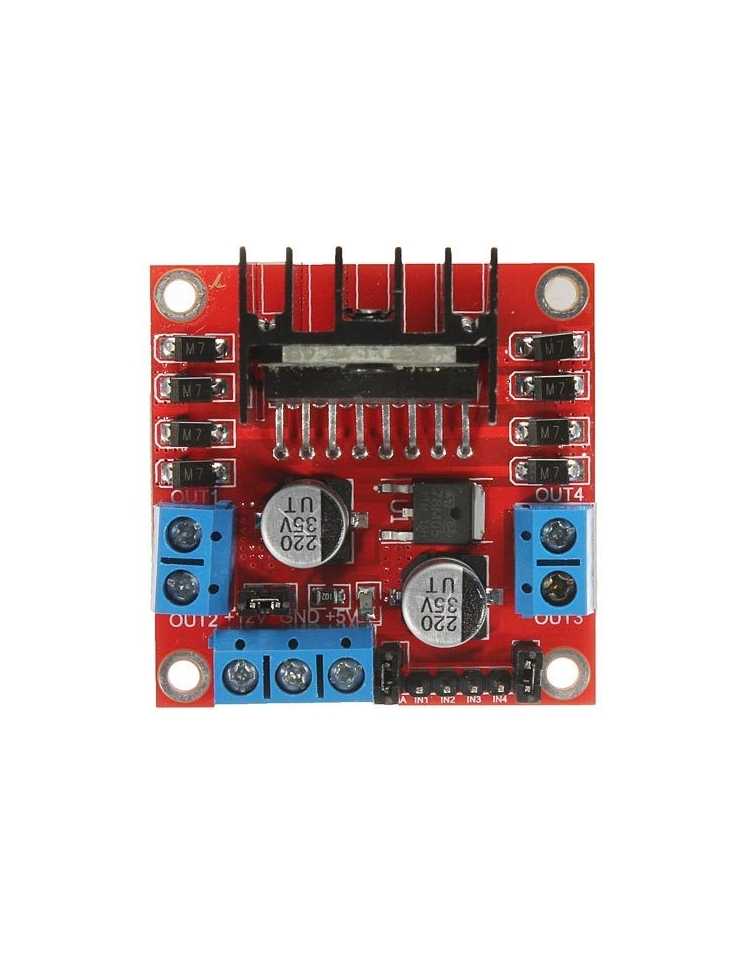
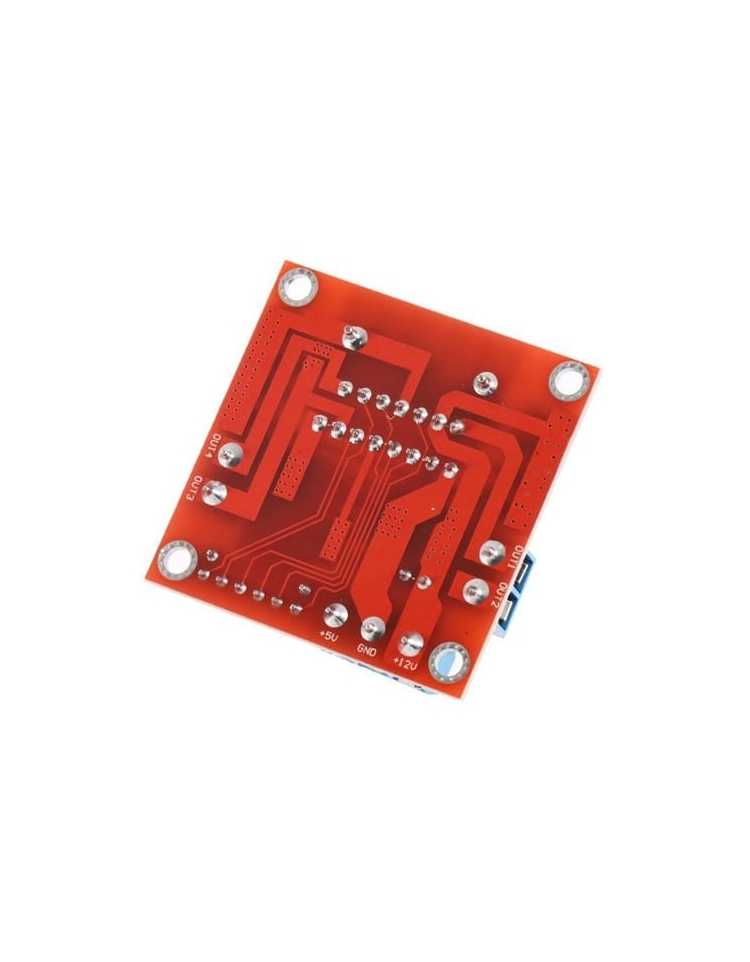
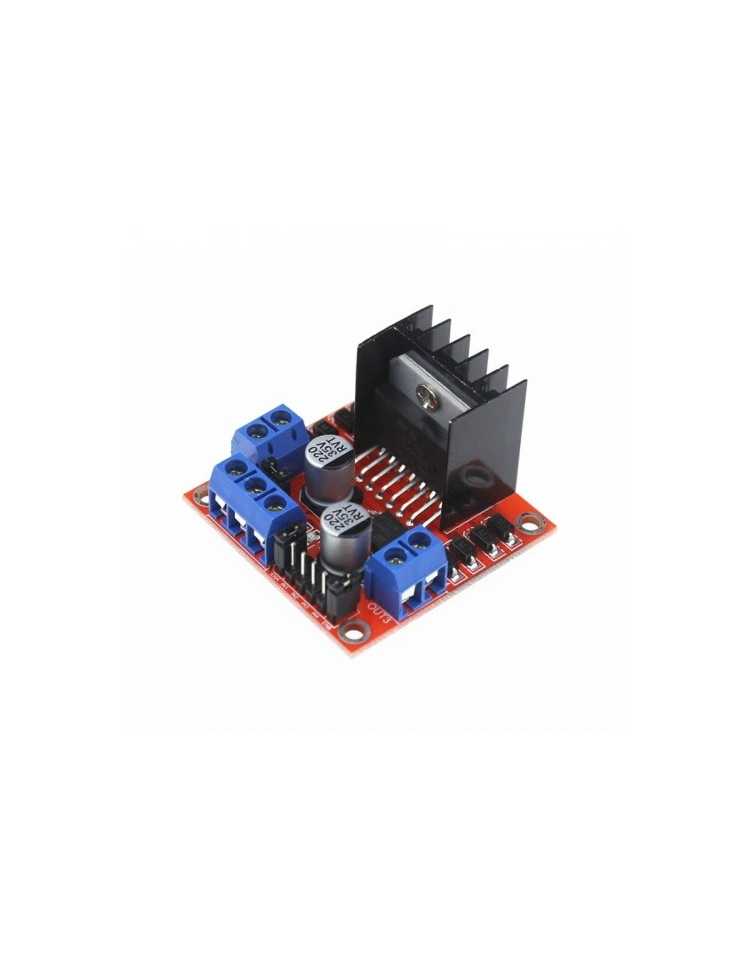
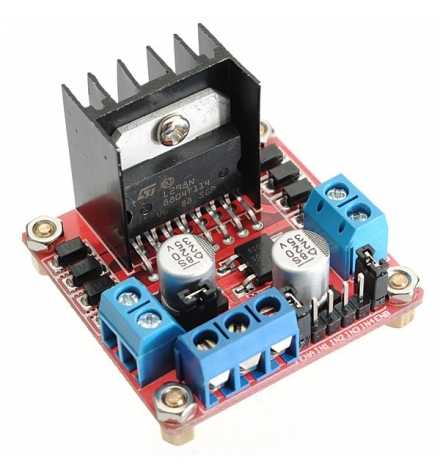
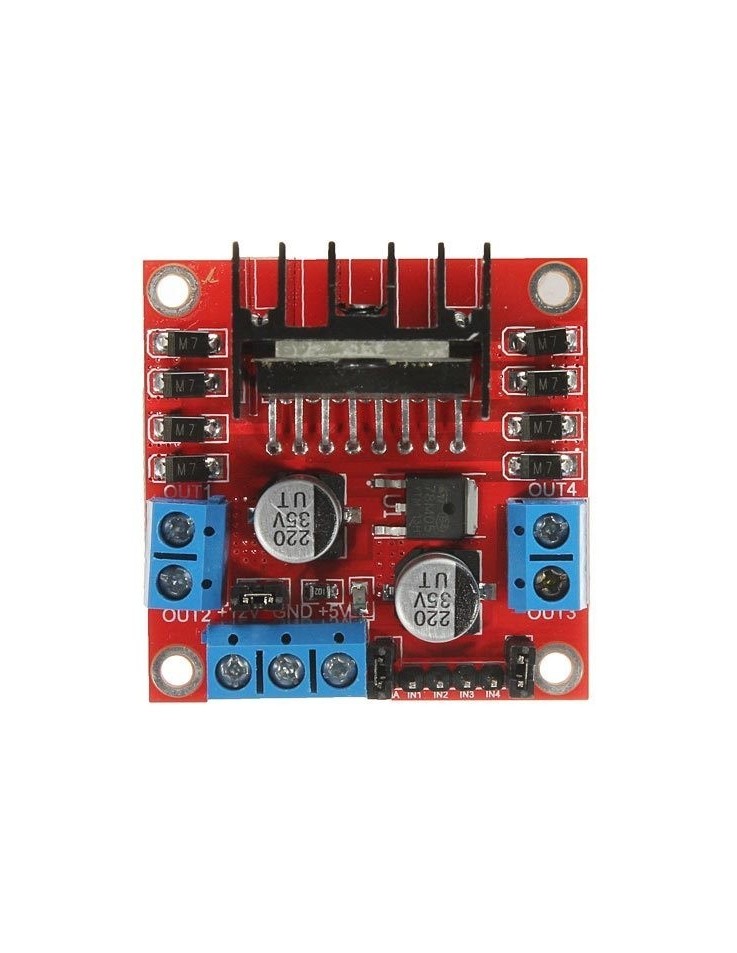
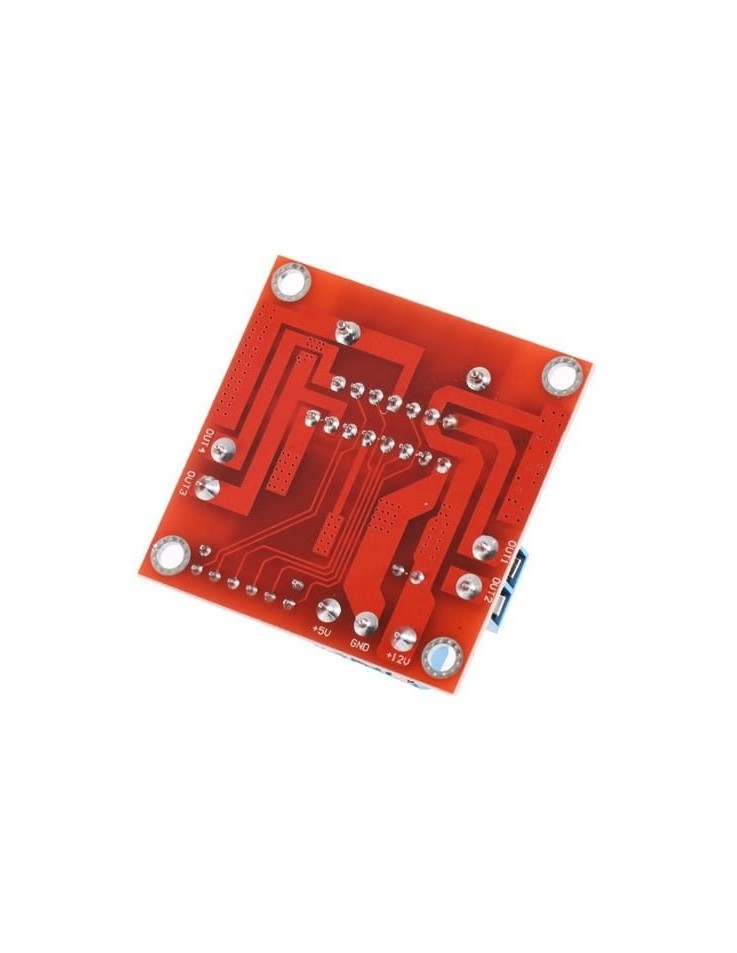
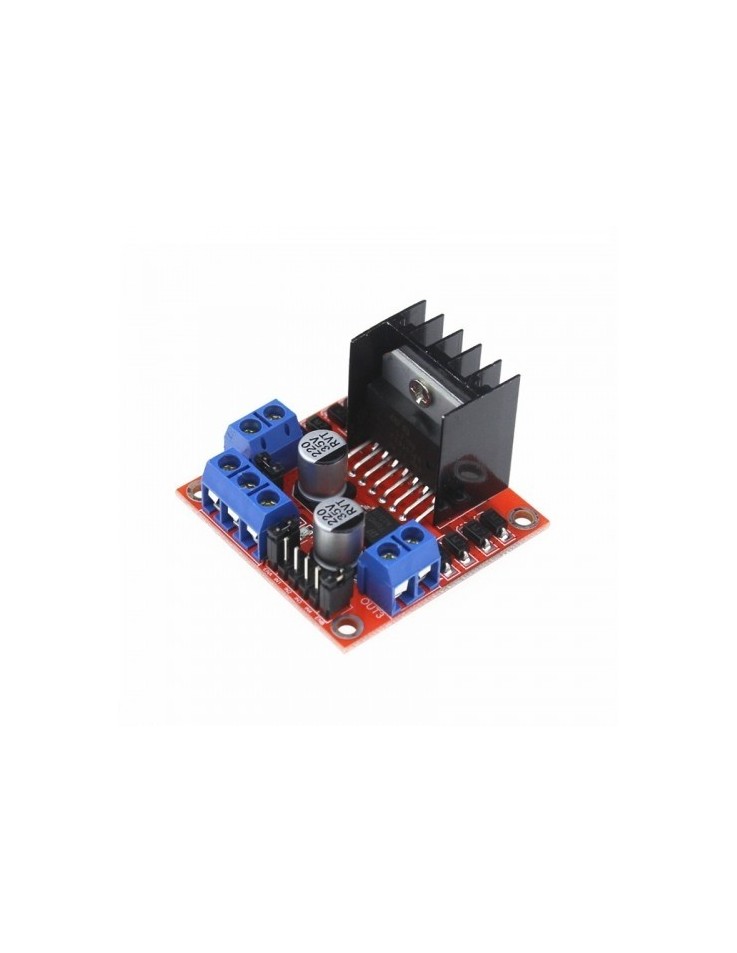
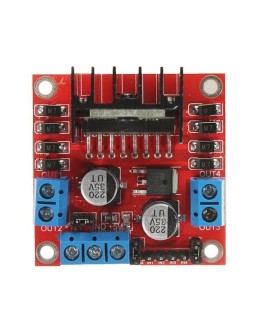
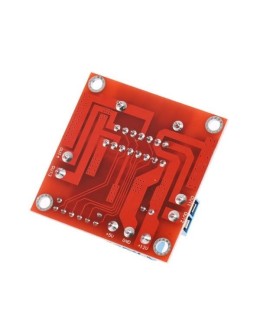
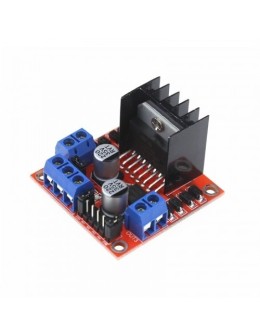
The L298N Dual Motor Driver Module (MPN: L298N) is a versatile, high-current motor driver built around the classic L298N Dual H-Bridge IC. It allows a low-power microcontroller — such as an Arduino, ESP32 or Raspberry Pi — to safely drive up to 2 DC motors independently, or 1 bipolar stepper motor, with full control over both speed (via PWM) and direction (via digital logic). Whether you are building a wheeled robot, a conveyor belt or a small CNC machine, the L298N module is one of the most widely used motor driver solutions in the maker community.
| PIN | Symbol | Description |
|---|---|---|
| 1 | IN1 | Direction control input for Motor A (digital HIGH/LOW) |
| 2 | IN2 | Direction control input for Motor A (digital HIGH/LOW) |
| 3 | IN3 | Direction control input for Motor B (digital HIGH/LOW) |
| 4 | IN4 | Direction control input for Motor B (digital HIGH/LOW) |
| 5 | ENA | Enable / PWM speed control for Motor A (jumper or PWM signal) |
| 6 | ENB | Enable / PWM speed control for Motor B (jumper or PWM signal) |
| 7 | OUT1 / OUT2 | Motor A output terminals |
| 8 | OUT3 / OUT4 | Motor B output terminals |
| 9 | VMS | Motor power supply input |
| 10 | VSS / 5V | 5 V regulated output (for microcontroller logic) |
| 11 | GND | Common ground |
Wiring note: Connect IN1–IN4 to digital output pins of your microcontroller. Remove the ENA/ENB jumpers and connect those pins to PWM-capable outputs for speed control. Share a common GND between the module and the microcontroller at all times.
| Specification | Value |
|---|---|
| Driver IC | L298N Dual H-Bridge |
| Control Interface | Digital logic + PWM |
| Motor Channels | 2 × DC motor or 1 × bipolar stepper |
| Max Power Dissipation | 20 W (at T = 75 °C) |
| Onboard Heatsink | Yes, aluminium |
| Onboard 5 V Regulator | Yes |
| MPN | L298N |
Q: Can I use the L298N module's onboard 5 V output to power my Arduino?
A: Yes — when the motor supply voltage is within the module's supported range, the onboard regulator provides a 5 V output that can power your Arduino's 5 V pin. This is a common wiring shortcut in robot builds, but ensure the current draw of your Arduino and sensors does not exceed the regulator's capacity.
Q: Why does the L298N get hot during use?
A: The L298N IC has a relatively high internal voltage drop across its output transistors, which generates heat — especially at higher currents. The onboard aluminium heatsink helps, but for continuous high-current applications, ensure adequate airflow around the module.