- Home
- Catalogues
- List of Supervising Constructions for High School - High School 2025-2026
- Catalogue of Science and Technology Aids 2025-2026
- Design & Technology Catalogue Primary Schools 2024-2025
- Catalogue of Science and Technology Aids 2024-25
- Catalogue of Science and Technology Aids 2023-24
- Christmas Crafts Set
- Nursery Schools Catalogue 2022-2023
- Nursery Schools Catalogue 2020-2021
- Nursery Schools Catalogue 2018-2019
- Happy and Creative Hands
- Jobs Category
- About us
- FAQ
- Terms and conditions of use
- Privacy Policy
- Cookies Policy
- Payment Methods
- Shipping Methods
- Returns Policy
- Payment Response
- Registration Successful
- Shipments to Greece
- New Service Point
- Teacher Registration
- Box Now Shipping Service
- 40 years Antoniadis
- Catalogues
- Catalogues
- About us
- Payment Methods
-
Educational Products
-
School Equipment
- All
- Write 'N' Wipe Boards
- White Magnetic Boards
- Board Erasers & Cleaners
- Interactive Boards
- Cork Boards
- Boards Paper Roll
- Talking Points
- Measuring Instruments
- Rotary Trimmer & Guillotine Machines
- Binding Machines
- Laminators
- Maps
- Literacy
- Time
- Presenters
- Music Instruments
- Batteries
- USB Memory Sticks
- Pocket Charts
- Various
-
Stationery
-
STEM - Robotics - Programming
-
Electronics
-
Educational Toys & Construction Kits
- All
- Mechanics
- Robotics
- Coding
- Simple Circuit Kits
- Science
- Green Science
- Planets
- Dinosaurs - Volcanos
- Animals
- Lenses
- Logic / Understanding
- Card & Board Games
- Rubik's Cubes
- Puzzles
- Magnetic Boards
- Hama Beads
- Painting Sets
- Craft Sets
- Creative Hands
- Soft Play Dough
- Fridge Magnets
- Wooden toys
- Baby Toys
- Gadgets
- Construction "Antoniadis"
- Seasonal
- Birthday Gifts
- Gift Vouchers
-
Tools & Adhesives
-
Craft Materials
- All
- Resin Art, Casting & Sculpting
- Decoupage & Mixed Media
- Items for Decoration
- Model Making & Mockup Supplies
- Creation Materials
- Decoratives
- Paints - Colours
- Mediums & Auxiliaries
- Canvases & Canvas Panels
- Clocks & Accessories
- Cards & Papers
- Fabrics
- Scrapbooking - Papers
- Powertex
- Quilling
- Seasonal
- All
- Acrylics
- Metallic - Pearl
- Chalk Paints
- Oil Paints
- Watercolours - Temperas
- Glass paints
- Fabric Paints
- Pouring Paint Sets
- Face painting
- Lasur Paints
- Chalkboard
- Pencils
- Chalks
- Markers
- Pastel-Crayons
- Outliners
- Alcohol Inks
- Spray
- Pigments for Liquid Glass
- Pigments
- Coloring Books
- Painting by numbers
- Paint Palettes and Containers
-
Art Supplies
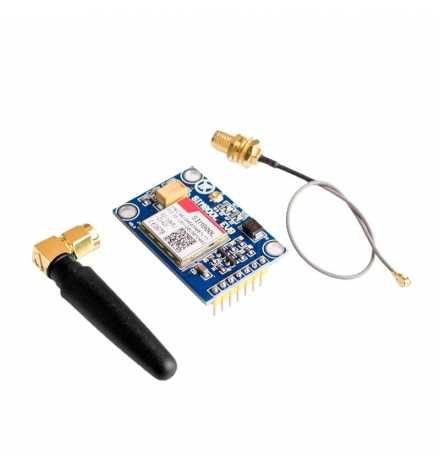
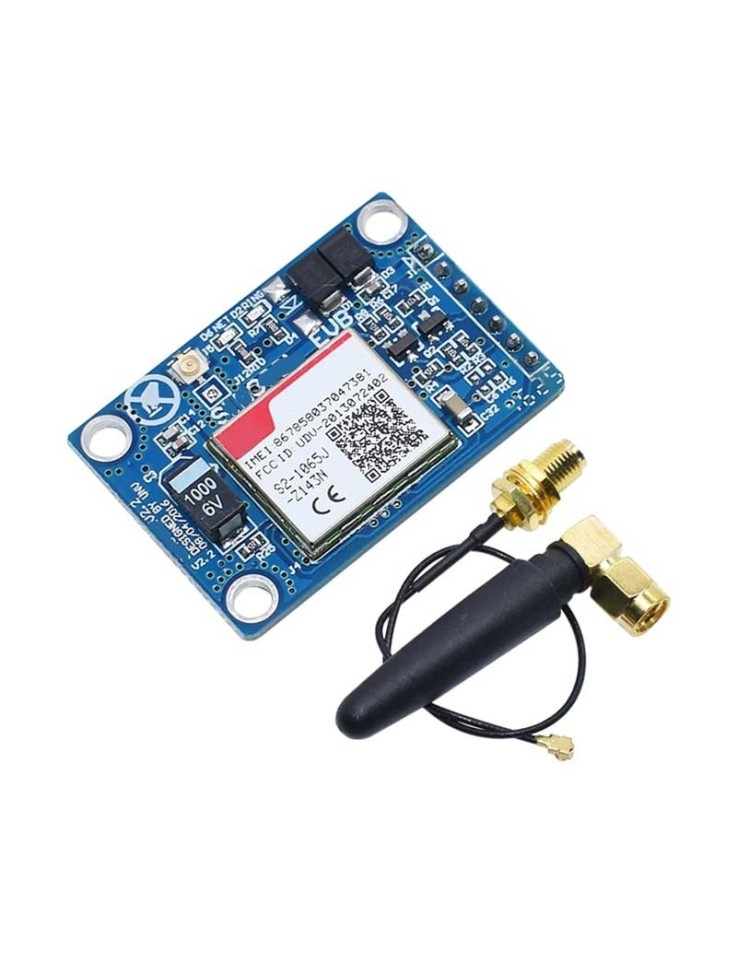
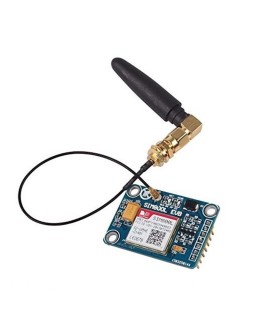
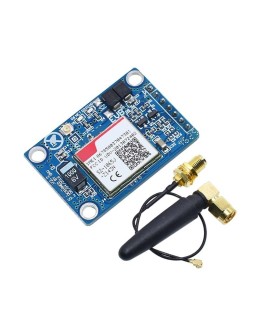
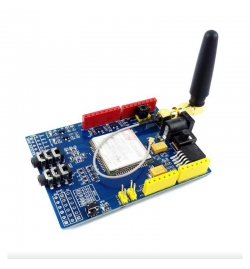
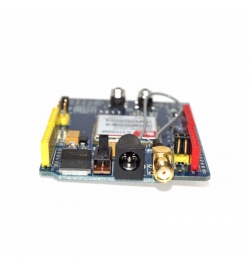
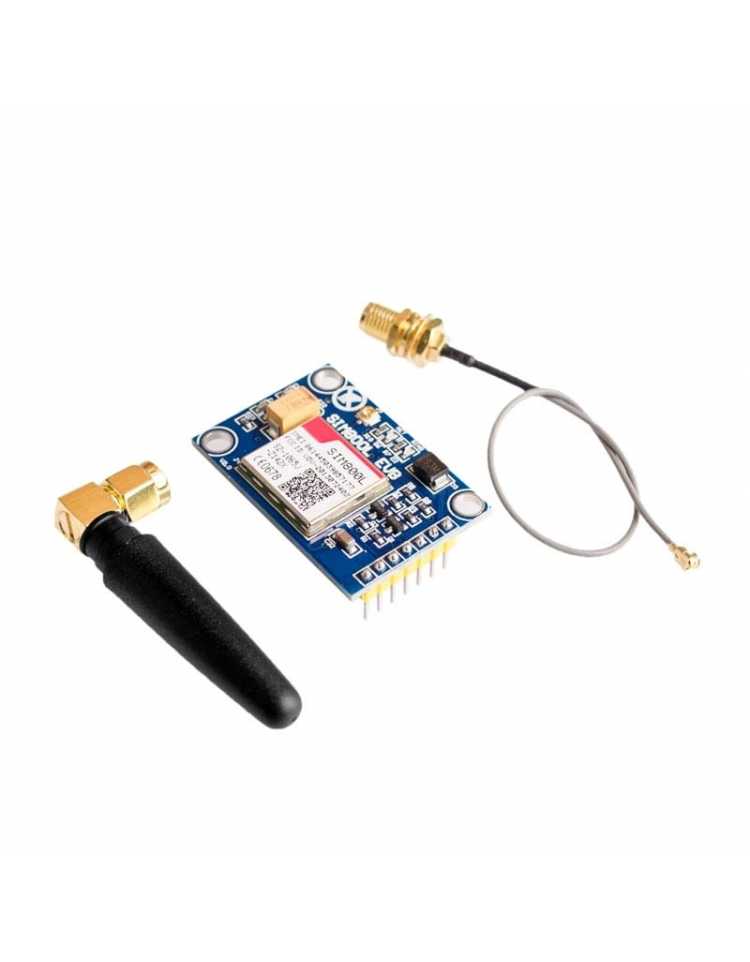
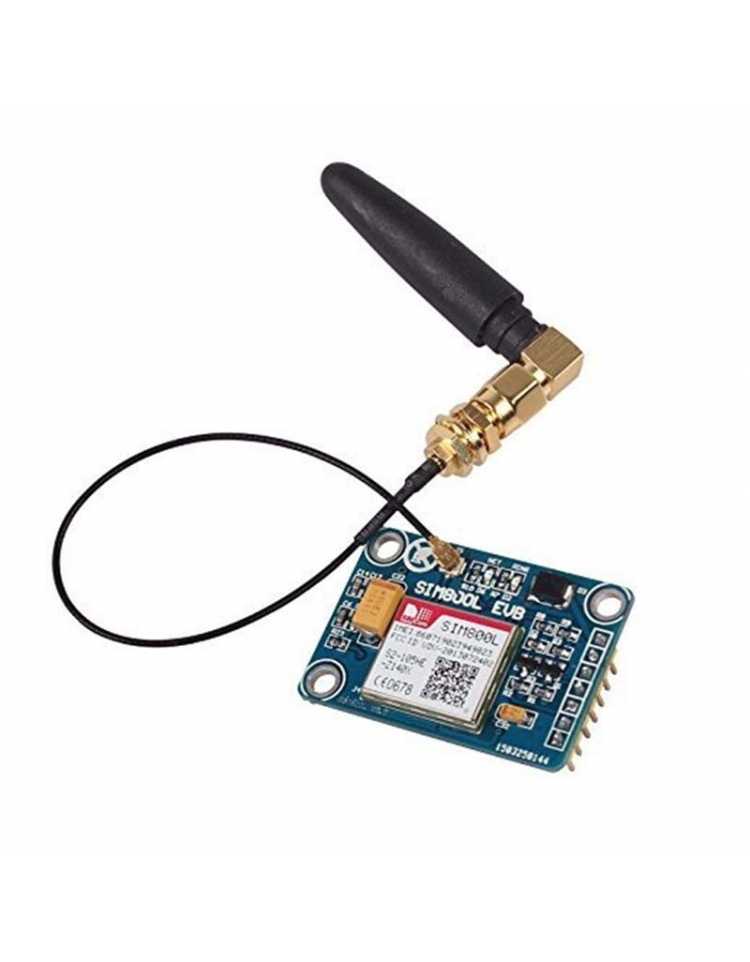
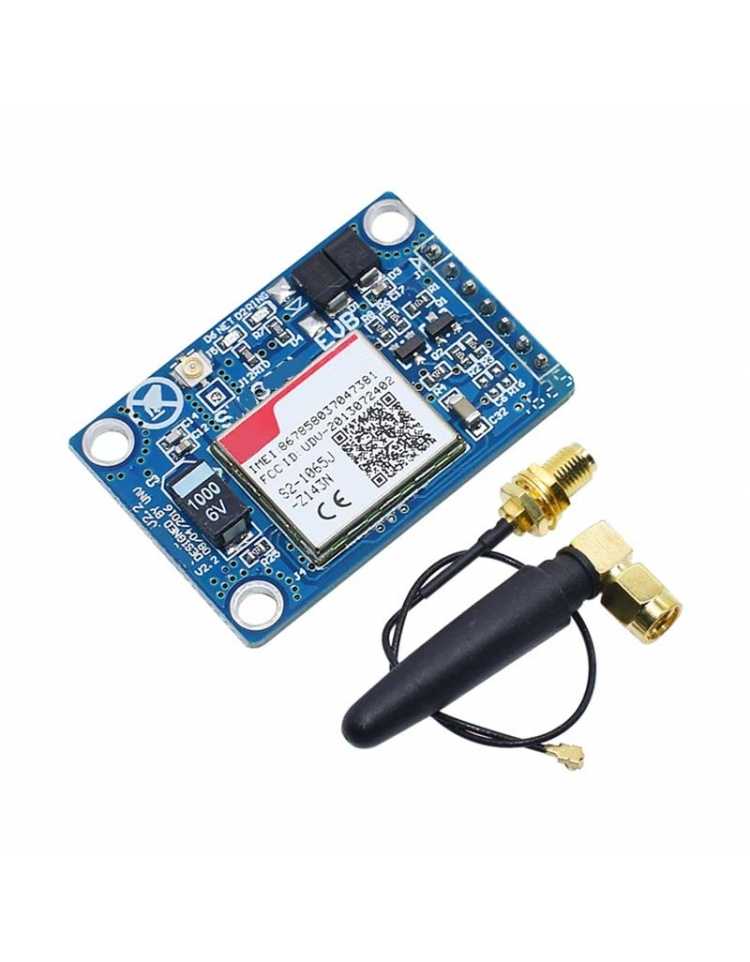
SIM800L V2.0 5V Wireless GSM GPRS MODULE Quad-Band
The SIM800L V2.0 is a complete Quad-Band GSM/GPRS solution in a compact LGA form factor, designed to add cellular connectivity to embedded systems and microcontroller projects. It communicates via a TTL-level serial interface using standard AT commands, making it straightforward to integrate with Arduino, ESP32, or any UART-capable platform. The module covers all four major GSM bands globally and supports voice calls, SMS, and GPRS data transmission.
Key Features
- Quad-Band GSM/GPRS: 850 / 900 / 1800 / 1900 MHz → works with SIM cards worldwide
- Supply Voltage 3.4–4.4 V: narrow range requiring a stable power supply → a dedicated LDO or Li-Ion cell is strongly recommended
- Peak Current ≥ 1 A: high burst current during transmission → adequate decoupling capacitors and a current-capable supply are essential
- TTL Serial Interface: standard UART with AT commands → easy control from any microcontroller
- Supports Voice, SMS & GPRS Data: versatile communication options → suitable for tracking, telemetry, and remote control applications
- Bluetooth & FM: additional built-in wireless features → extra functionality without extra hardware
- Embedded AT Commands: industry-standard command set → extensive library and community support available
- Operating Temperature: −40 °C to +85 °C: wide industrial range → suitable for outdoor and harsh-environment deployments
- Onboard Antenna Interface: dedicated connector for external antenna → improved signal range and reliability
Compatibility
- Arduino UNO / Nano / Mega: Compatible via SoftwareSerial or HardwareSerial (UART). Note: Arduino operates at 5 V logic — use a level shifter on TX/RX lines to protect the SIM800L's 2.8 V logic inputs. Power the module from a separate 3.7 V Li-Ion cell or a dedicated regulator, not from the Arduino 3.3 V pin, which cannot supply the required peak current.
- ESP32 / ESP8266: Direct UART connection is possible (3.3 V logic compatible), but again power must come from a dedicated supply capable of delivering ≥1 A peak current.
- Raspberry Pi: Usable via UART GPIO pins with appropriate power supply; 3.3 V GPIO logic is compatible.
Typical Applications
- GPS/GSM Trackers: Send location data via SMS or GPRS to a server — a classic SIM800L project for vehicle or asset tracking.
- Remote Sensor Monitoring: IoT nodes in remote areas where Wi-Fi is unavailable transmit readings over GPRS to a cloud dashboard.
- SMS Alert Systems: Home automation or industrial alarms that send SMS notifications when a threshold is exceeded.
- Voice Call Automation: Automated phone call systems for security panels or emergency notification devices.
- GPRS Data Loggers: Field devices that upload logged data to a server at regular intervals using HTTP over GPRS.
Technical Specifications
| Parameter | Value |
|---|---|
| Interface | TTL Serial (UART) + AT Commands |
| Supply Voltage | 3.4 – 4.4 V |
| Peak Current | ≥ 1 A |
| GSM Bands | 850 / 900 / 1800 / 1900 MHz (Quad-Band) |
| Supported Services | Voice, SMS, GPRS Data |
| Additional Features | Bluetooth, FM, Embedded AT Commands |
| Operating Temperature | −40 °C to +85 °C |
| Form Factor | LGA |
| MPN | SIM800L V2.0 |
FAQ
Q: Can I power the SIM800L directly from the Arduino 5 V or 3.3 V pin?
A: No. The module requires 3.4–4.4 V and a peak current of at least 1 A during GSM transmission. The Arduino's onboard regulators cannot supply this current. Always use a dedicated power source such as a 3.7 V Li-Ion battery or a high-current LDO regulator.
Q: Do I need a level shifter to connect SIM800L to an Arduino UNO?
A: Yes. The Arduino UNO outputs 5 V logic on its TX pin, while the SIM800L expects 2.8 V logic levels. Use a resistor voltage divider or a logic-level converter on the Arduino TX → SIM800L RX line to avoid damaging the module.
⚠ Important Power Warning: This module draws peak currents of 1 A or more during GSM transmission. Insufficient power supply voltage (below 3.4 V under load) is the most common cause of connection failures. Always use a stable, high-current power source and add a 100 µF bulk capacitor close to the module's power pins.