- Home
- Catalogues
- List of Supervising Constructions for High School - High School 2025-2026
- Catalogue of Science and Technology Aids 2025-2026
- Design & Technology Catalogue Primary Schools 2024-2025
- Catalogue of Science and Technology Aids 2024-25
- Catalogue of Science and Technology Aids 2023-24
- Christmas Crafts Set
- Nursery Schools Catalogue 2022-2023
- Nursery Schools Catalogue 2020-2021
- Nursery Schools Catalogue 2018-2019
- Happy and Creative Hands
- Jobs Category
- About us
- FAQ
- Terms and conditions of use
- Privacy Policy
- Cookies Policy
- Payment Methods
- Shipping Methods
- Returns Policy
- Payment Response
- Registration Successful
- Shipments to Greece
- New Service Point
- Teacher Registration
- Box Now Shipping Service
- 40 years Antoniadis
- Catalogues
- Catalogues
- About us
- Payment Methods
-
Educational Products
-
School Equipment
- All
- Write 'N' Wipe Boards
- White Magnetic Boards
- Board Erasers & Cleaners
- Interactive Boards
- Cork Boards
- Boards Paper Roll
- Talking Points
- Measuring Instruments
- Rotary Trimmer & Guillotine Machines
- Binding Machines
- Laminators
- Maps
- Literacy
- Time
- Presenters
- Music Instruments
- Batteries
- USB Memory Sticks
- Pocket Charts
- Various
-
Stationery
-
STEM - Robotics - Programming
-
Electronics
-
Educational Toys & Construction Kits
- All
- Mechanics
- Robotics
- Coding
- Simple Circuit Kits
- Science
- Green Science
- Planets
- Dinosaurs - Volcanos
- Animals
- Lenses
- Logic / Understanding
- Card & Board Games
- Rubik's Cubes
- Puzzles
- Magnetic Boards
- Hama Beads
- Painting Sets
- Craft Sets
- Creative Hands
- Soft Play Dough
- Fridge Magnets
- Wooden toys
- Baby Toys
- Gadgets
- Construction "Antoniadis"
- Seasonal
- Birthday Gifts
- Gift Vouchers
-
Tools & Adhesives
-
Craft Materials
- All
- Resin Art, Casting & Sculpting
- Decoupage & Mixed Media
- Items for Decoration
- Model Making & Mockup Supplies
- Creation Materials
- Decoratives
- Paints - Colours
- Mediums & Auxiliaries
- Canvases & Canvas Panels
- Clocks & Accessories
- Cards & Papers
- Fabrics
- Scrapbooking - Papers
- Powertex
- Quilling
- Seasonal
- All
- Acrylics
- Metallic - Pearl
- Chalk Paints
- Oil Paints
- Watercolours - Temperas
- Glass paints
- Fabric Paints
- Pouring Paint Sets
- Face painting
- Lasur Paints
- Chalkboard
- Pencils
- Chalks
- Markers
- Pastel-Crayons
- Outliners
- Alcohol Inks
- Spray
- Pigments for Liquid Glass
- Pigments
- Coloring Books
- Painting by numbers
- Paint Palettes and Containers
-
Art Supplies
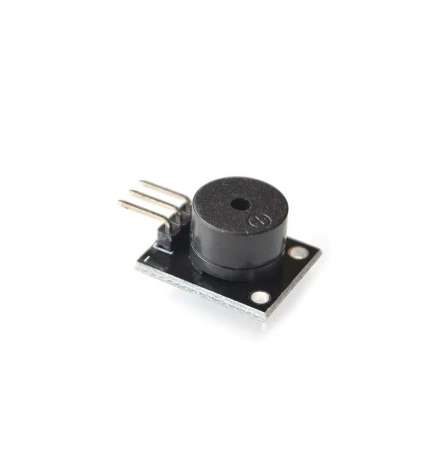
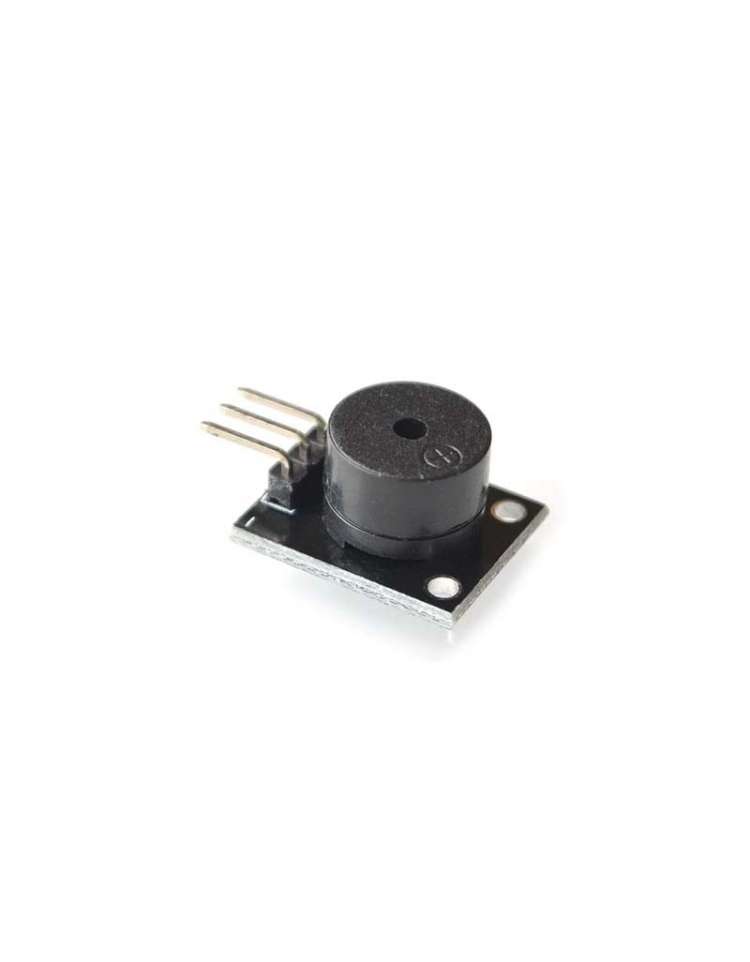
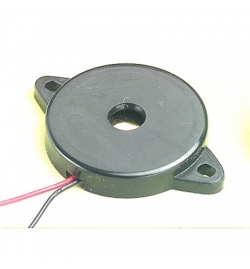
Passive buzzer Sensor Module KY-006
The KY-006 Passive Buzzer Sensor Module (MPN: KY-006) is a simple yet versatile sound output module designed for Arduino and compatible microcontroller projects. Because it is a passive buzzer, it does not contain an internal oscillator — it requires a PWM (Pulse Width Modulation) or toggled digital signal from your microcontroller to vibrate its piezoelectric element and produce sound. This gives you precise control over the tone frequency, making it ideal for playing melodies, alerts, and sound effects in your builds.
Κύρια Χαρακτηριστικά / Key Features
- Passive design: No internal oscillator → you control the frequency via PWM, enabling melodies and custom tones
- 3-pin interface: Simple Signal / Power / GND connection → drop-in compatible with standard Arduino sensor shield layouts
- Piezoelectric element: Low power consumption, no moving parts → reliable and long-lasting sound output
- Compact module form factor: Ready-to-use PCB with header pins → no soldering or extra components required
Pinout & Wiring
| PIN | Symbol | Description |
|---|---|---|
| 1 | S (Signal) | PWM or digital signal input from microcontroller |
| 2 | + | Power supply (VCC) |
| 3 | – | Ground (GND) |
Wiring note: Connect the Signal pin to a PWM-capable digital pin on your Arduino (e.g. D3, D5, D6, D9, D10, D11). Use the Arduino tone() function to specify frequency and duration. No current-limiting resistor is typically required for standard 5 V operation.
Compatibility
- Arduino UNO / Nano / Mega: Fully compatible at 5 V logic — use the built-in
tone()function on any PWM pin. - ESP32 / ESP8266 (3.3 V): Compatible with 3.3 V logic levels; use
ledcWriteTone()(ESP32) ortone()library for ESP8266. - Raspberry Pi (via GPIO + PWM): Compatible with 3.3 V GPIO hardware or software PWM.
Typical Applications
- Melody playback: Play simple tunes and sound effects in DIY music boxes or educational projects.
- Alarm & alert systems: Trigger audible warnings in security sensors, smoke detectors, or door bell circuits.
- Arduino beginner projects: A classic first-project component for learning PWM,
tone(), and frequency control. - Game controllers & interactive toys: Provide audio feedback for button presses, scores, or game-over events.
- Timers & reminders: Beep notifications in countdown timers, kitchen gadgets, or wearables.
Technical Specifications
| Interface | Digital / PWM Signal |
| Buzzer Type | Passive (Piezoelectric) |
| Pins | 3 (Signal, VCC, GND) |
| MPN | KY-006 |
FAQ
Q: What is the difference between the KY-006 (passive) and the KY-012 (active) buzzer?
A: The KY-006 is a passive buzzer — it needs an external PWM signal to produce sound, so you can vary the pitch and play melodies. The KY-012 is an active buzzer with an internal oscillator that produces a fixed tone when power is applied, requiring only a HIGH/LOW digital signal.
Q: Which Arduino function do I use with the KY-006?
A: Use the built-in tone(pin, frequency, duration) function. For example, tone(8, 440, 500) plays the note A4 (440 Hz) for 500 ms on digital pin 8.
⚠ Note: This is a passive buzzer module. Connecting it directly to a constant DC voltage (like a simple HIGH pin) without a PWM signal will produce little or no audible sound. Always use a frequency-generating function such as
tone().