- Home
- Catalogues
- List of Supervising Constructions for High School - High School 2025-2026
- Catalogue of Science and Technology Aids 2025-2026
- Design & Technology Catalogue Primary Schools 2024-2025
- Catalogue of Science and Technology Aids 2024-25
- Catalogue of Science and Technology Aids 2023-24
- Christmas Crafts Set
- Nursery Schools Catalogue 2022-2023
- Nursery Schools Catalogue 2020-2021
- Nursery Schools Catalogue 2018-2019
- Happy and Creative Hands
- Jobs Category
- About us
- FAQ
- Terms and conditions of use
- Privacy Policy
- Cookies Policy
- Payment Methods
- Shipping Methods
- Returns Policy
- Payment Response
- Registration Successful
- Shipments to Greece
- New Service Point
- Teacher Registration
- Box Now Shipping Service
- 40 years Antoniadis
- Catalogues
- Catalogues
- About us
- Payment Methods
-
Educational Products
-
School Equipment
- All
- Write 'N' Wipe Boards
- White Magnetic Boards
- Board Erasers & Cleaners
- Interactive Boards
- Cork Boards
- Boards Paper Roll
- Talking Points
- Measuring Instruments
- Rotary Trimmer & Guillotine Machines
- Binding Machines
- Laminators
- Maps
- Literacy
- Time
- Presenters
- Music Instruments
- Batteries
- USB Memory Sticks
- Pocket Charts
- Various
-
Stationery
-
STEM - Robotics - Programming
-
Electronics
-
Educational Toys & Construction Kits
- All
- Mechanics
- Robotics
- Coding
- Simple Circuit Kits
- Science
- Green Science
- Planets
- Dinosaurs - Volcanos
- Animals
- Lenses
- Logic / Understanding
- Card & Board Games
- Rubik's Cubes
- Puzzles
- Magnetic Boards
- Hama Beads
- Painting Sets
- Craft Sets
- Creative Hands
- Soft Play Dough
- Fridge Magnets
- Wooden toys
- Baby Toys
- Gadgets
- Construction "Antoniadis"
- Seasonal
- Birthday Gifts
- Gift Vouchers
-
Tools & Adhesives
-
Craft Materials
- All
- Resin Art, Casting & Sculpting
- Decoupage & Mixed Media
- Items for Decoration
- Model Making & Mockup Supplies
- Creation Materials
- Decoratives
- Paints - Colours
- Mediums & Auxiliaries
- Canvases & Canvas Panels
- Clocks & Accessories
- Cards & Papers
- Fabrics
- Scrapbooking - Papers
- Powertex
- Quilling
- Seasonal
- All
- Acrylics
- Metallic - Pearl
- Chalk Paints
- Oil Paints
- Watercolours - Temperas
- Glass paints
- Fabric Paints
- Pouring Paint Sets
- Face painting
- Lasur Paints
- Chalkboard
- Pencils
- Chalks
- Markers
- Pastel-Crayons
- Outliners
- Alcohol Inks
- Spray
- Pigments for Liquid Glass
- Pigments
- Coloring Books
- Painting by numbers
- Paint Palettes and Containers
-
Art Supplies
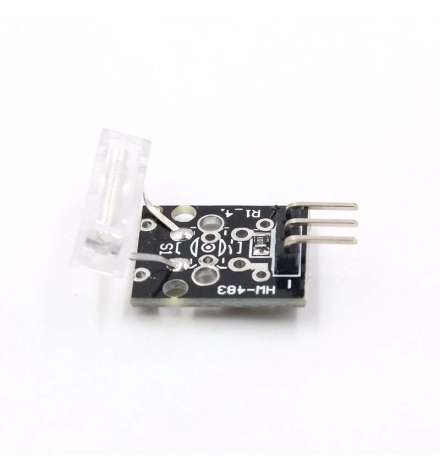
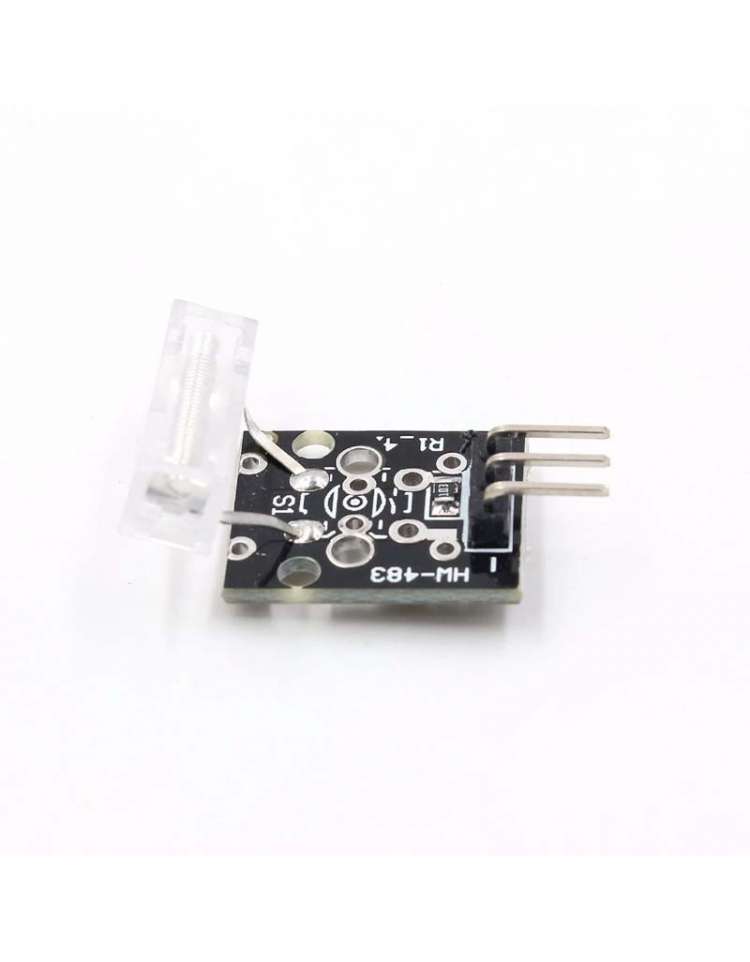
Percussion Knock Sensor KY-031
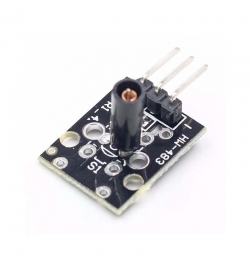
The KY-031 Percussion Knock Sensor Module (MPN: KY-031) is a digital vibration/knock detection module designed for Arduino and compatible microcontroller projects. When a physical knock or percussion impact is detected, the sensor outputs a digital HIGH signal on its output pin, allowing your microcontroller to react instantly — for example by flashing an LED, triggering an alarm, or logging an event. Its compact footprint and simple 3-pin interface make it one of the easiest sensor modules to integrate into any beginner or intermediate project.
Key Features
- Digital Output: Outputs a clean HIGH/LOW signal on impact → no ADC required, works directly with any digital pin
- Built-in LED Indicator: On-board LED lights up when a knock is detected → instant visual feedback without extra components
- Compact Form Factor: 30×18×6 mm PCB → fits easily inside enclosures and wearables
- Simple 3-Pin Interface: VCC, GND, Signal → plug-and-play wiring in seconds
- Arduino Example Code Included: Ready-to-use sketch available → ideal for beginners and classroom projects
Pinout & Wiring
| PIN | Symbol | Description |
|---|---|---|
| 1 | VCC | Power supply positive (connect to 5V) |
| 2 | GND | Power supply ground |
| 3 | S (Signal) | Digital output — connect to a digital input pin (e.g. D3) |
Wiring Note: Connect VCC to Arduino 5V, GND to Arduino GND, and the Signal pin to digital pin 3. The built-in LED on the module will flash on each detected knock. For the example sketch, connect an additional LED (or use the built-in board LED) to digital pin 13.
Compatibility
- Arduino UNO / Nano / Mega: Fully compatible — operates at 5V logic, connects directly to any digital GPIO pin without level shifting.
- Other 5V microcontrollers: Compatible with any 5V digital-input microcontroller platform.
Typical Applications
- Knock-activated switches: Turn on lights or appliances by tapping a surface — great for hidden panel triggers.
- Anti-theft vibration alarm: Detect if a protected object is moved or struck and trigger an audible/visual alert.
- Interactive art installations: Respond to drumming or tapping gestures in physical computing projects.
- Educational robotics: Teach students digital sensor reading and interrupt-based programming with a tangible, fun input.
- Percussion-triggered data logging: Count and timestamp knock events for sports training equipment or mechanical testing rigs.
Technical Specifications
| Interface | Digital output (3-pin: VCC / GND / Signal) |
| Output Type | Digital (HIGH on knock detected) |
| Dimensions | 30 × 18 × 6 mm (approx.) |
| MPN | KY-031 |
FAQ
Q: Which Arduino pin should I connect the knock sensor signal to?
A: The example sketch uses digital pin 3 for the sensor signal and pin 13 for the LED. You can reassign these to any available digital pins by changing the variable definitions at the top of the sketch.
Q: Does the KY-031 work with ESP32 or Raspberry Pi?
A: The KY-031 is rated for 5V systems and is confirmed compatible with Arduino. Use with 3.3V platforms such as ESP32 or Raspberry Pi may require a level shifter or voltage divider on the signal line to avoid damaging the GPIO pin.
⚠ Note: This module is designed for 5V operation. Do not connect directly to 3.3V GPIO pins without appropriate level shifting.