Ελληνικά
Your cart
There are no more items in your cart
 Educational Products
 School Equipment
 Stationery
 STEM - Robotics - Programming
 Electronics
 Educational Toys & Construction Kits
 Tools & Adhesives
 Craft Materials
 Art Supplies
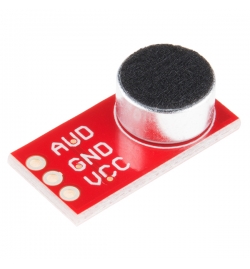
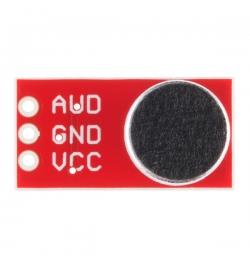
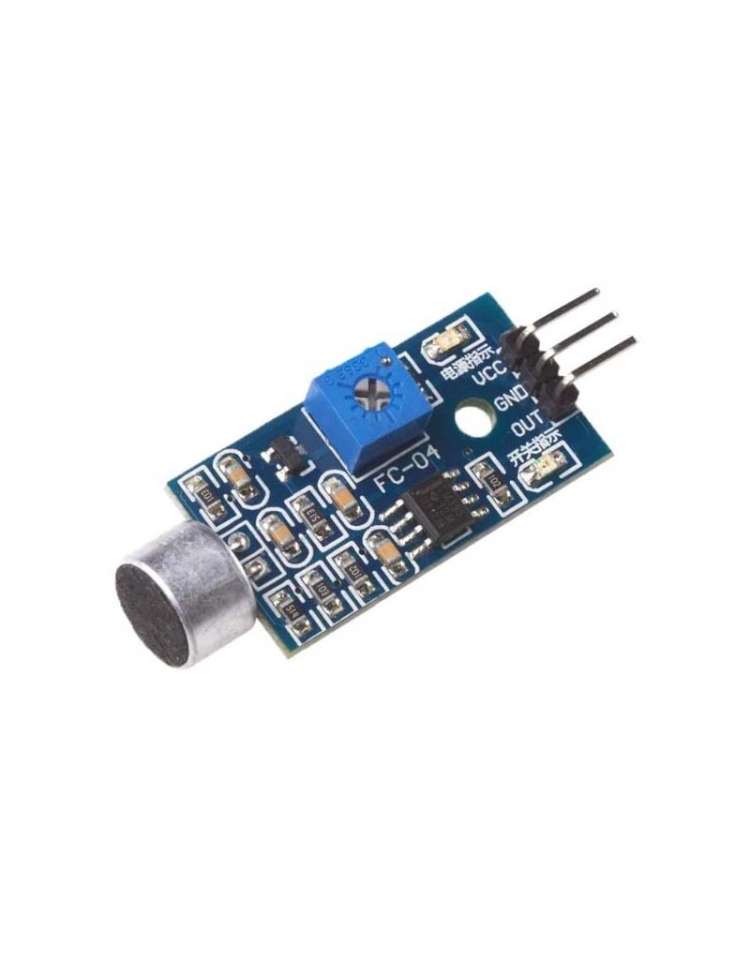
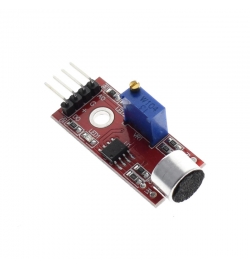
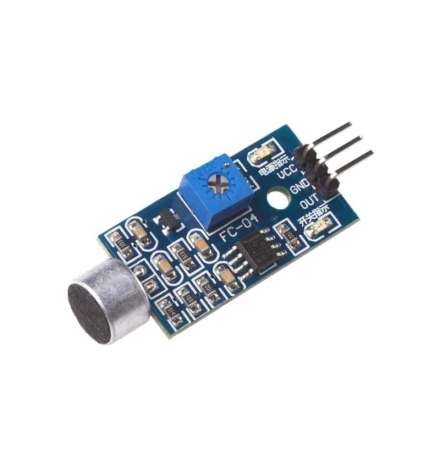
The LM393 Sound Detection Sensor Module (MPN: LM393) is a compact digital sound detector built around the popular LM393 dual voltage comparator IC. When the onboard microphone picks up sound above a set threshold, the comparator switches its output LOW and the indicator LED lights up — giving your Arduino or compatible board an instant digital signal with no ADC or special library needed.
digitalRead() or attach to an interrupt pin| PIN | Symbol | Description |
|---|---|---|
| 1 | VCC | Power supply 4–6 V (connect to Arduino 5 V) |
| 2 | GND | Ground (connect to Arduino GND) |
| 3 | DO | Digital Output — LOW when sound detected; connect to any Arduino digital pin |
Wiring note: Connect VCC → 5 V, GND → GND, DO → any digital pin (e.g. D2 for interrupt). Use digitalRead() and check for LOW to detect a sound event. The on-board potentiometer (if present) adjusts sensitivity.
digitalRead().| Parameter | Value |
|---|---|
| Interface | Digital GPIO (DO pin) |
| Operating Voltage | 4 V – 6 V DC |
| Output Channels | 1 (Single-channel) |
| Output Logic (active) | LOW (active-low) |
| Indicator | On-board LED (lights when output is LOW) |
| Dimensions | 3.1 × 1.6 × 0.8 cm |
| MPN | LM393 |
Q: Do I need a special Arduino library for this module?
A: No. The LM393 comparator does all the threshold work on-board. Simply use digitalRead() on the DO pin and check for a LOW state to detect sound.
Q: Why does the output go LOW instead of HIGH when sound is detected?
A: The LM393 has an open-collector output. When a sound crosses the threshold, the comparator pulls the output to GND (LOW) and the indicator LED turns on. Design your sketch to trigger on LOW.