- Home
- Catalogues
- List of Supervising Constructions for High School - High School 2025-2026
- Catalogue of Science and Technology Aids 2025-2026
- Design & Technology Catalogue Primary Schools 2024-2025
- Catalogue of Science and Technology Aids 2024-25
- Catalogue of Science and Technology Aids 2023-24
- Christmas Crafts Set
- Nursery Schools Catalogue 2022-2023
- Nursery Schools Catalogue 2020-2021
- Nursery Schools Catalogue 2018-2019
- Happy and Creative Hands
- Jobs Category
- About us
- FAQ
- Terms and conditions of use
- Privacy Policy
- Cookies Policy
- Payment Methods
- Shipping Methods
- Returns Policy
- Payment Response
- Registration Successful
- Shipments to Greece
- New Service Point
- Teacher Registration
- Box Now Shipping Service
- 40 years Antoniadis
- Catalogues
- Catalogues
- About us
- Payment Methods
-
Educational Products
-
School Equipment
- All
- Write 'N' Wipe Boards
- White Magnetic Boards
- Board Erasers & Cleaners
- Interactive Boards
- Cork Boards
- Boards Paper Roll
- Talking Points
- Measuring Instruments
- Rotary Trimmer & Guillotine Machines
- Binding Machines
- Laminators
- Maps
- Literacy
- Time
- Presenters
- Music Instruments
- Batteries
- USB Memory Sticks
- Pocket Charts
- Various
-
Stationery
-
STEM - Robotics - Programming
-
Electronics
-
Educational Toys & Construction Kits
- All
- Mechanics
- Robotics
- Coding
- Simple Circuit Kits
- Science
- Green Science
- Planets
- Dinosaurs - Volcanos
- Animals
- Lenses
- Logic / Understanding
- Card & Board Games
- Rubik's Cubes
- Puzzles
- Magnetic Boards
- Hama Beads
- Painting Sets
- Craft Sets
- Creative Hands
- Soft Play Dough
- Fridge Magnets
- Wooden toys
- Baby Toys
- Gadgets
- Construction "Antoniadis"
- Seasonal
- Birthday Gifts
- Gift Vouchers
-
Tools & Adhesives
-
Craft Materials
- All
- Resin Art, Casting & Sculpting
- Decoupage & Mixed Media
- Items for Decoration
- Model Making & Mockup Supplies
- Creation Materials
- Decoratives
- Paints - Colours
- Mediums & Auxiliaries
- Canvases & Canvas Panels
- Clocks & Accessories
- Cards & Papers
- Fabrics
- Scrapbooking - Papers
- Powertex
- Quilling
- Seasonal
- All
- Acrylics
- Metallic - Pearl
- Chalk Paints
- Oil Paints
- Watercolours - Temperas
- Glass paints
- Fabric Paints
- Pouring Paint Sets
- Face painting
- Lasur Paints
- Chalkboard
- Pencils
- Chalks
- Markers
- Pastel-Crayons
- Outliners
- Alcohol Inks
- Spray
- Pigments for Liquid Glass
- Pigments
- Coloring Books
- Painting by numbers
- Paint Palettes and Containers
-
Art Supplies
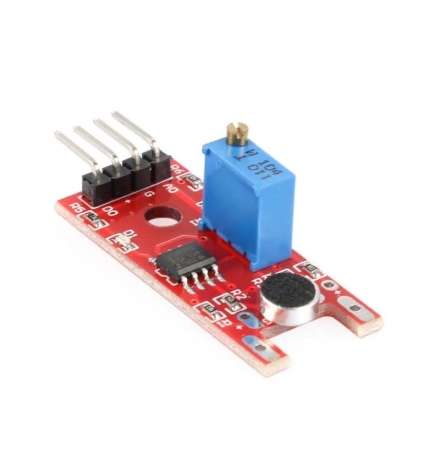
Microphone Voice Sound Sensor Module KY-038
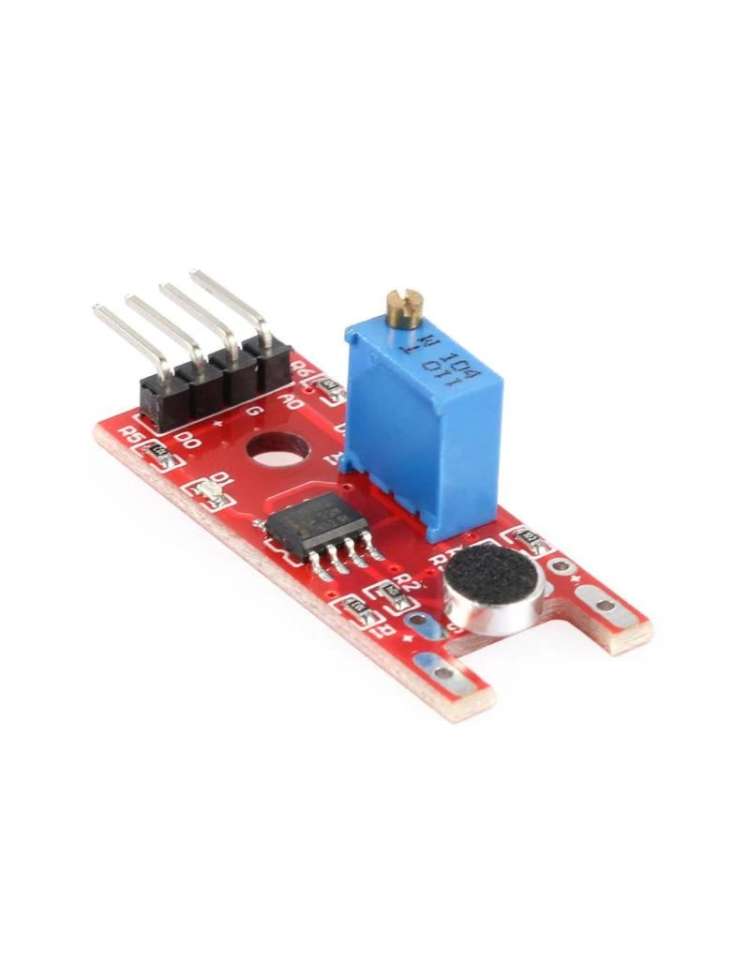
The KY-038 Microphone Voice Sound Sensor Module (MPN: KY-038) is a compact, easy-to-use sound detection module built around a high-sensitivity electret condenser microphone (ECM). It provides both an analog output (AO) for real-time sound level readings and a digital output (DO) for simple threshold-based detection, making it one of the most popular modules for Arduino-based sound-sensing applications.
Key Features
- High-Sensitivity ECM Sensor: Detects a wide range of sound levels with precision → reliable sound triggering even in quiet environments
- Power Indicator LED: Onboard LED lights up when the module is powered → instant visual confirmation of correct wiring
- Comparator Output LED: Second onboard LED indicates when the digital output is triggered → easy threshold debugging without a microcontroller
- Analog Output (AO): Real-time microphone voltage signal → read raw sound levels via ADC for audio envelope detection
- Digital Output (DO): High/Low signal based on comparator threshold → direct GPIO-compatible output for simple clap or noise detection
- Adjustable Sensitivity: Onboard potentiometer for threshold tuning → adapt the module to any acoustic environment without code changes
Pinout & Wiring
| Pin | Symbol | Description |
|---|---|---|
| 1 | AO | Analog Output – real-time microphone voltage signal |
| 2 | GND | Ground |
| 3 | VCC | Power Supply (5V) |
| 4 | DO | Digital Output – High/Low comparator signal |
Wiring note: Connect VCC to 5V, GND to GND, DO to any digital pin for clap detection, and AO to an analog pin (A0–A5) if you need continuous sound level monitoring.
Compatibility
- Arduino UNO / Nano / Mega: Fully compatible — the module operates at 5V and the DO output connects directly to any digital GPIO pin; AO connects to any ADC-capable analog pin.
- Raspberry Pi / ESP32 (3.3V logic): Use a logic-level shifter or voltage divider on the AO line, as these boards use 3.3V ADC inputs.
Typical Applications
- Clap-activated switches: Turn lights or devices on/off with a clap — the DO output handles this with zero extra components.
- Sound-level monitoring: Log ambient noise over time using the AO output and an Arduino ADC for classroom or workshop projects.
- Voice-activated triggers: Wake up a microcontroller from sleep mode when a sound threshold is exceeded.
- Security & alarm systems: Detect glass-break or loud impact sounds as part of a DIY alarm.
- Interactive robotics: Let a robot respond to hand claps or voice commands in maker and STEM education projects.
Technical Specifications
| Interface | Analog (AO) + Digital (DO) |
| Operating Voltage | 5V DC |
| Output Type | Analog voltage signal (AO) / Digital High-Low (DO) |
| Sensitivity Adjustment | Onboard potentiometer |
| Microphone Type | Electret Condenser Microphone (ECM) |
| Indicators | Power LED + Comparator output LED |
| MPN | KY-038 |
FAQ
Q: What is the difference between AO and DO on the KY-038?
A: AO (Analog Output) provides a continuous voltage that rises and falls with sound level — ideal for measuring sound intensity. DO (Digital Output) switches between HIGH and LOW based on a fixed threshold set by the potentiometer — ideal for simple event detection like clapping.
Q: Can I use the KY-038 with an ESP32?
A: The module runs on 5V, but the AO signal may exceed the 3.3V ADC limit of an ESP32. Use a voltage divider on the AO line. The DO output is typically safe to connect directly to an ESP32 GPIO when powered at 5V, but verify signal levels with a multimeter first.
⚠ Note: The analog output voltage is referenced to the module's VCC. When using with 3.3V microcontrollers (ESP32, Raspberry Pi), protect ADC inputs from overvoltage using a voltage divider.