- Home
- Catalogues
- List of Supervising Constructions for High School - High School 2025-2026
- Catalogue of Science and Technology Aids 2025-2026
- Design & Technology Catalogue Primary Schools 2024-2025
- Catalogue of Science and Technology Aids 2024-25
- Catalogue of Science and Technology Aids 2023-24
- Christmas Crafts Set
- Nursery Schools Catalogue 2022-2023
- Nursery Schools Catalogue 2020-2021
- Nursery Schools Catalogue 2018-2019
- Happy and Creative Hands
- Jobs Category
- About us
- FAQ
- Terms and conditions of use
- Privacy Policy
- Cookies Policy
- Payment Methods
- Shipping Methods
- Returns Policy
- Payment Response
- Registration Successful
- Shipments to Greece
- New Service Point
- Teacher Registration
- Box Now Shipping Service
- 40 years Antoniadis
- Catalogues
- Catalogues
- About us
- Payment Methods
-
Educational Products
-
School Equipment
- All
- Write 'N' Wipe Boards
- White Magnetic Boards
- Board Erasers & Cleaners
- Interactive Boards
- Cork Boards
- Boards Paper Roll
- Talking Points
- Measuring Instruments
- Rotary Trimmer & Guillotine Machines
- Binding Machines
- Laminators
- Maps
- Literacy
- Time
- Presenters
- Music Instruments
- Batteries
- USB Memory Sticks
- Pocket Charts
- Various
-
Stationery
-
STEM - Robotics - Programming
-
Electronics
-
Educational Toys & Construction Kits
- All
- Mechanics
- Robotics
- Coding
- Simple Circuit Kits
- Science
- Green Science
- Planets
- Dinosaurs - Volcanos
- Animals
- Lenses
- Logic / Understanding
- Card & Board Games
- Rubik's Cubes
- Puzzles
- Magnetic Boards
- Hama Beads
- Painting Sets
- Craft Sets
- Creative Hands
- Soft Play Dough
- Fridge Magnets
- Wooden toys
- Baby Toys
- Gadgets
- Construction "Antoniadis"
- Seasonal
- Birthday Gifts
- Gift Vouchers
-
Tools & Adhesives
-
Craft Materials
- All
- Resin Art, Casting & Sculpting
- Decoupage & Mixed Media
- Items for Decoration
- Model Making & Mockup Supplies
- Creation Materials
- Decoratives
- Paints - Colours
- Mediums & Auxiliaries
- Canvases & Canvas Panels
- Clocks & Accessories
- Cards & Papers
- Fabrics
- Scrapbooking - Papers
- Powertex
- Quilling
- Seasonal
- All
- Acrylics
- Metallic - Pearl
- Chalk Paints
- Oil Paints
- Watercolours - Temperas
- Glass paints
- Fabric Paints
- Pouring Paint Sets
- Face painting
- Lasur Paints
- Chalkboard
- Pencils
- Chalks
- Markers
- Pastel-Crayons
- Outliners
- Alcohol Inks
- Spray
- Pigments for Liquid Glass
- Pigments
- Coloring Books
- Painting by numbers
- Paint Palettes and Containers
-
Art Supplies
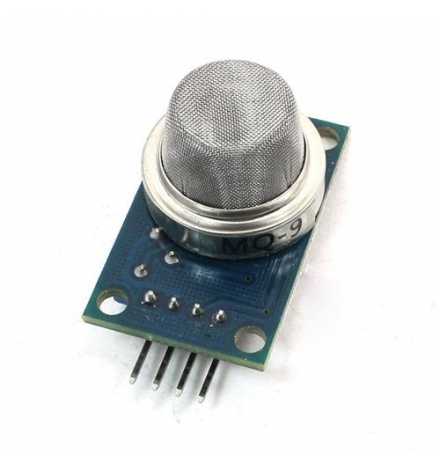
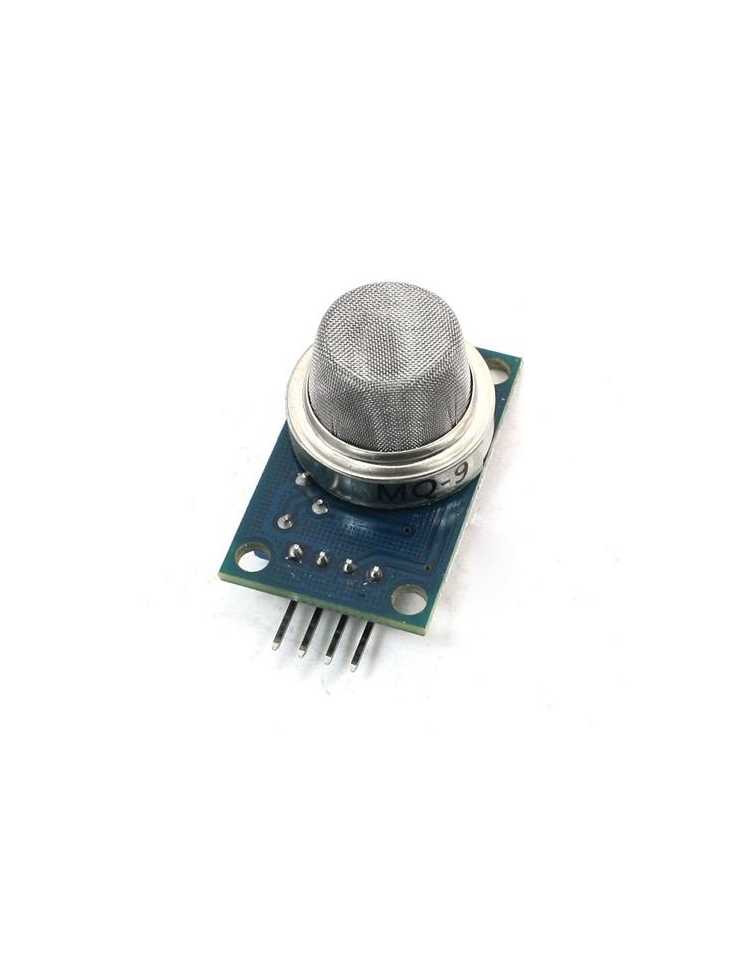
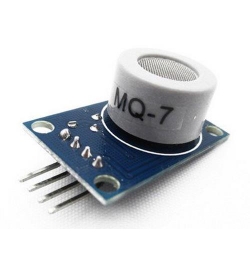
CO Carbon Monoxide Methane Liquefied Gas Sensor MQ-9
The MQ-9 (MPN: MQ-9) is a multi-gas sensor designed to detect carbon monoxide (CO), methane, and liquefied petroleum gases such as propane. It uses a tin dioxide (SnO₂) sensitive material whose electrical conductivity rises as target gas concentration increases. A unique dual-temperature heating cycle allows it to distinguish between gas types: low-temperature operation (1.5 V heating) targets carbon monoxide, while high-temperature operation (5.0 V heating) targets combustible gases like methane and propane. A simple external circuit converts conductivity changes into a measurable output signal, making this sensor a popular choice for DIY gas alarms, home safety devices, and educational projects.
Key Features
- Dual-temperature detection cycle (1.5 V / 5 V heating): Enables separate detection of CO at low temperature and combustible gases (methane, propane) at high temperature → versatile multi-gas sensing in a single component
- SnO₂ sensitive element: Conductivity increases with rising gas concentration → reliable and repeatable gas detection response
- Simple signal conversion: Conductivity change can be converted to an output voltage via a basic load resistor circuit → easy integration with microcontroller ADC inputs
- Targets CO, methane, and propane: Covers the most common household and industrial hazardous gases → broad safety monitoring coverage
Pinout & Wiring
| PIN | Symbol | Description |
|---|---|---|
| 1 | VH | Heater voltage supply |
| 2 | GND (H) | Heater ground |
| 3 | VCC | Circuit supply voltage |
| 4 | GND (A) | Circuit ground |
| 5 / 6 | A / B | Sensor output (connect load resistor to GND; read voltage across resistor) |
Wiring note: Apply 5.0 V to VH during high-temperature phase and 1.5 V during low-temperature phase as per the recommended heating cycle. Connect a load resistor (RL) between the output pin and GND, then read the voltage across RL with an analog input pin.
Compatibility
- Arduino UNO / Nano / Mega (5 V): Directly compatible — connect sensor output to any analog input pin (A0–A5). No level shifting required for the signal line.
- ESP32 / Raspberry Pi (3.3 V logic): The heater and circuit supply can still be powered at 5 V; however, use a voltage divider or level shifter on the output signal line to protect 3.3 V ADC inputs.
Typical Applications
- Home CO alarm systems: Detect dangerous carbon monoxide build-up from faulty heating appliances or blocked flues.
- LPG / natural gas leak detectors: Monitor for methane or propane leaks in kitchens, boiler rooms, or storage areas.
- Industrial safety monitors: Deploy in workshops or factories where combustible gases may accumulate.
- Arduino / ESP32 maker projects: Build a portable multi-gas meter or a smart ventilation controller that activates a fan when gas levels rise.
- Educational labs: Demonstrate gas sensing principles, ADC readings, and threshold-based alert logic for electronics and IoT courses.
Technical Specifications
| Interface | Analog (resistive output) |
| Heater Voltage (VH) — low-temperature phase | 1.5 V |
| Heater Voltage (VH) — high-temperature phase | 5.0 V |
| Target Gases | Carbon Monoxide (CO), Methane (CH₄), Propane (C₃H₈) |
| Sensitive Material | Tin Dioxide (SnO₂) |
| Detection Method | Dual-temperature heating cycle |
| MPN | MQ-9 |
Frequently Asked Questions
Q: What is the difference between the MQ-9 low-temperature and high-temperature phases?
A: At low temperature (1.5 V heater), the sensor is optimised to detect carbon monoxide. At high temperature (5.0 V heater), it detects combustible gases such as methane and propane. Cycling between these two states allows a single sensor to cover multiple gas types.
Q: Can I use the MQ-9 directly with an ESP32?
A: Yes, but with caution. The heater and circuit supply can run at 5 V, while the output signal should be attenuated (voltage divider or level shifter) before connecting to the ESP32's 3.3 V ADC to avoid damage.
⚠ Warning: Allow a warm-up / pre-heat period before taking measurements — the SnO₂ element requires stabilisation time after power-on. Keep away from high humidity environments for extended periods, as moisture can affect sensor accuracy.