- Home
- Catalogues
- List of Supervising Constructions for High School - High School 2025-2026
- Catalogue of Science and Technology Aids 2025-2026
- Design & Technology Catalogue Primary Schools 2024-2025
- Catalogue of Science and Technology Aids 2024-25
- Catalogue of Science and Technology Aids 2023-24
- Christmas Crafts Set
- Nursery Schools Catalogue 2022-2023
- Nursery Schools Catalogue 2020-2021
- Nursery Schools Catalogue 2018-2019
- Happy and Creative Hands
- Jobs Category
- About us
- FAQ
- Terms and conditions of use
- Privacy Policy
- Cookies Policy
- Payment Methods
- Shipping Methods
- Returns Policy
- Payment Response
- Registration Successful
- Shipments to Greece
- New Service Point
- Teacher Registration
- Box Now Shipping Service
- 40 years Antoniadis
- Catalogues
- Catalogues
- About us
- Payment Methods
-
Educational Products
-
School Equipment
- All
- Write 'N' Wipe Boards
- White Magnetic Boards
- Board Erasers & Cleaners
- Interactive Boards
- Cork Boards
- Boards Paper Roll
- Talking Points
- Measuring Instruments
- Rotary Trimmer & Guillotine Machines
- Binding Machines
- Laminators
- Maps
- Literacy
- Time
- Presenters
- Music Instruments
- Batteries
- USB Memory Sticks
- Pocket Charts
- Various
-
Stationery
-
STEM - Robotics - Programming
-
Electronics
-
Educational Toys & Construction Kits
- All
- Mechanics
- Robotics
- Coding
- Simple Circuit Kits
- Science
- Green Science
- Planets
- Dinosaurs - Volcanos
- Animals
- Lenses
- Logic / Understanding
- Card & Board Games
- Rubik's Cubes
- Puzzles
- Magnetic Boards
- Hama Beads
- Painting Sets
- Craft Sets
- Creative Hands
- Soft Play Dough
- Fridge Magnets
- Wooden toys
- Baby Toys
- Gadgets
- Construction "Antoniadis"
- Seasonal
- Birthday Gifts
- Gift Vouchers
-
Tools & Adhesives
-
Craft Materials
- All
- Resin Art, Casting & Sculpting
- Decoupage & Mixed Media
- Items for Decoration
- Model Making & Mockup Supplies
- Creation Materials
- Decoratives
- Paints - Colours
- Mediums & Auxiliaries
- Canvases & Canvas Panels
- Clocks & Accessories
- Cards & Papers
- Fabrics
- Scrapbooking - Papers
- Powertex
- Quilling
- Seasonal
- All
- Acrylics
- Metallic - Pearl
- Chalk Paints
- Oil Paints
- Watercolours - Temperas
- Glass paints
- Fabric Paints
- Pouring Paint Sets
- Face painting
- Lasur Paints
- Chalkboard
- Pencils
- Chalks
- Markers
- Pastel-Crayons
- Outliners
- Alcohol Inks
- Spray
- Pigments for Liquid Glass
- Pigments
- Coloring Books
- Painting by numbers
- Paint Palettes and Containers
-
Art Supplies
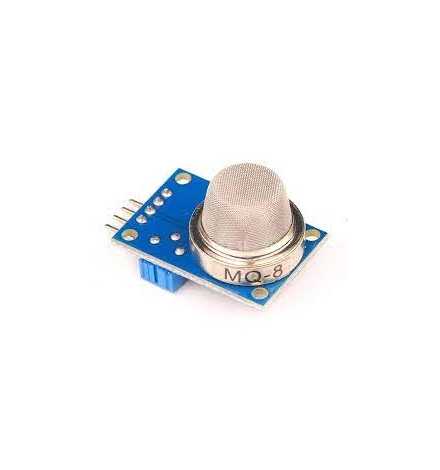
Hydrogen Gas Sensor Module H2 Alarm Detection MQ-8
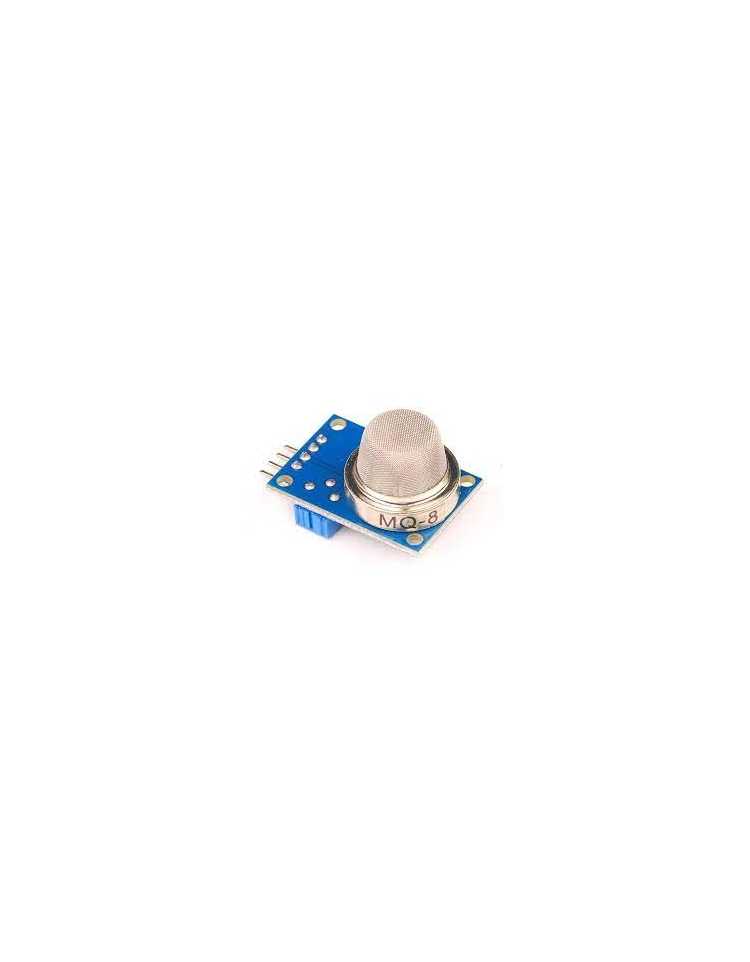
The MQ-8 Hydrogen Gas Sensor Module (MPN: MQ-8) is a compact detection board designed to sense hydrogen (H2) gas concentration in the surrounding environment. Built around the MQ-8 sensitive element and the LM393 voltage comparator, it provides both a digital TTL signal and an analog voltage output, making it straightforward to integrate into alarm systems, safety monitors, and IoT gas-detection projects. It operates directly from a 5V DC supply, which makes it a natural fit for Arduino-based platforms.
Key Features
- Dual Signal Output: Provides both TTL (digital) and analog (0–5V) outputs simultaneously → connect to any digital or analog pin without extra circuitry
- TTL Active-Low Logic: The digital output goes LOW when gas is detected → directly readable by any microcontroller's digital input, no level shifting needed at 5V
- Analog Proportional Output (0–5V): Output voltage rises with H2 concentration → allows precise threshold tuning via software
- High H2 Sensitivity: The MQ-8 element is specifically optimised for hydrogen gas → reliable detection even at low concentrations
- Interference Resistance: Resistant to ethanol vapour, LPG, and smoke → reduces false alarms in mixed-gas environments
- Onboard Signal LED: Visual indicator for output status → useful for quick bench testing without a microcontroller
- Long Service Life & Stable Operation: The MQ-8 element is known for durability and reliability → suitable for continuous monitoring applications
- Fast Response & Recovery: Quick reaction to gas presence and clearance → essential for safety alarm systems requiring rapid response
- Compact Form Factor: 35 × 20 × 21 mm → fits easily into enclosures and prototyping setups
Pinout & Wiring
| PIN | Symbol | Description |
|---|---|---|
| 1 | VCC | Power supply — connect to 5V DC |
| 2 | GND | Ground — connect to GND |
| 3 | DO | Digital (TTL) output — active LOW when gas detected; connect to a digital input pin |
| 4 | AO | Analog output — 0–5V proportional to H2 concentration; connect to an analog input pin |
Wiring note: Connect VCC to the 5V rail and GND to common ground. For digital threshold detection, read DO on any digital pin. For concentration measurement, connect AO to an analog pin (e.g., A0 on Arduino) and read the ADC value — higher voltage means higher H2 concentration. Allow a warm-up period of approximately 20 seconds after power-on before readings stabilise.
Compatibility
- Arduino UNO / Nano / Mega: Full compatibility — 5V operating voltage matches Arduino logic and power rails; AO connects directly to any analog input (A0–A5), DO to any digital pin.
- Other 5V Microcontrollers: Compatible with any 5V MCU platform. Note: the 0–5V analog output is not directly suitable for 3.3V ADC inputs without a voltage divider.
Typical Applications
- Hydrogen leak detection in laboratories, fuel cell research setups, and industrial environments where H2 is stored or used
- Safety alarm systems that trigger a buzzer or relay when H2 concentration exceeds a set threshold
- Arduino/microcontroller learning projects exploring gas sensing, ADC reading, and threshold-based alerting
- Smart home or garage monitoring where hydrogen-generating equipment (e.g., lead-acid battery charging) is present
- IoT environmental monitoring nodes combined with ESP8266/ESP32 (via 5V supply + voltage divider on AO) for remote gas alerts
Technical Specifications
| Parameter | Value |
|---|---|
| Interface | TTL Digital Output (DO) + Analog Output (AO) |
| Working Voltage | DC 5V |
| Analog Output Range | 0 – 5V (proportional to H2 concentration) |
| TTL Output Logic | Active LOW on gas detection |
| Main Chip | LM393 + MQ-8 gas sensing element |
| Target Gas | Hydrogen (H2) |
| Interference Resistance | Ethanol vapour, LPG, smoke |
| Dimensions | 35 × 20 × 21 mm |
| MPN | MQ-8 |
FAQ
Q: Does the MQ-8 module need a warm-up time before use?
A: Yes. Like all MQ-series sensors, the MQ-8 requires a short warm-up period after power-on (typically around 20 seconds) for the heating element to reach operating temperature and for readings to stabilise. Factor this into your firmware startup sequence.
Q: Can I use the analog output (AO) with an ESP32 or Raspberry Pi?
A: The AO outputs up to 5V, which exceeds the 3.3V logic of ESP32 and Raspberry Pi ADC inputs. Use a resistor voltage divider (e.g., 10kΩ / 20kΩ) to scale AO down to 0–3.3V before connecting to a 3.3V ADC input.
⚠ Safety Warning: This module is intended for educational and prototyping use only. It is not certified for use as a safety-critical gas detection device. Always follow appropriate safety procedures when working in environments where hydrogen gas may be present. Hydrogen is highly flammable — ensure adequate ventilation and avoid ignition sources.