- Home
- Catalogues
- List of Supervising Constructions for High School - High School 2025-2026
- Catalogue of Science and Technology Aids 2025-2026
- Design & Technology Catalogue Primary Schools 2024-2025
- Catalogue of Science and Technology Aids 2024-25
- Catalogue of Science and Technology Aids 2023-24
- Christmas Crafts Set
- Nursery Schools Catalogue 2022-2023
- Nursery Schools Catalogue 2020-2021
- Nursery Schools Catalogue 2018-2019
- Happy and Creative Hands
- Jobs Category
- About us
- FAQ
- Terms and conditions of use
- Privacy Policy
- Cookies Policy
- Payment Methods
- Shipping Methods
- Returns Policy
- Payment Response
- Registration Successful
- Shipments to Greece
- New Service Point
- Teacher Registration
- Box Now Shipping Service
- 40 years Antoniadis
- Catalogues
- Catalogues
- About us
- Payment Methods
-
Educational Products
-
School Equipment
- All
- Write 'N' Wipe Boards
- White Magnetic Boards
- Board Erasers & Cleaners
- Interactive Boards
- Cork Boards
- Boards Paper Roll
- Talking Points
- Measuring Instruments
- Rotary Trimmer & Guillotine Machines
- Binding Machines
- Laminators
- Maps
- Literacy
- Time
- Presenters
- Music Instruments
- Batteries
- USB Memory Sticks
- Pocket Charts
- Various
-
Stationery
-
STEM - Robotics - Programming
-
Electronics
-
Educational Toys & Construction Kits
- All
- Mechanics
- Robotics
- Coding
- Simple Circuit Kits
- Science
- Green Science
- Planets
- Dinosaurs - Volcanos
- Animals
- Lenses
- Logic / Understanding
- Card & Board Games
- Rubik's Cubes
- Puzzles
- Magnetic Boards
- Hama Beads
- Painting Sets
- Craft Sets
- Creative Hands
- Soft Play Dough
- Fridge Magnets
- Wooden toys
- Baby Toys
- Gadgets
- Construction "Antoniadis"
- Seasonal
- Birthday Gifts
- Gift Vouchers
-
Tools & Adhesives
-
Craft Materials
- All
- Resin Art, Casting & Sculpting
- Decoupage & Mixed Media
- Items for Decoration
- Model Making & Mockup Supplies
- Creation Materials
- Decoratives
- Paints - Colours
- Mediums & Auxiliaries
- Canvases & Canvas Panels
- Clocks & Accessories
- Cards & Papers
- Fabrics
- Scrapbooking - Papers
- Powertex
- Quilling
- Seasonal
- All
- Acrylics
- Metallic - Pearl
- Chalk Paints
- Oil Paints
- Watercolours - Temperas
- Glass paints
- Fabric Paints
- Pouring Paint Sets
- Face painting
- Lasur Paints
- Chalkboard
- Pencils
- Chalks
- Markers
- Pastel-Crayons
- Outliners
- Alcohol Inks
- Spray
- Pigments for Liquid Glass
- Pigments
- Coloring Books
- Painting by numbers
- Paint Palettes and Containers
-
Art Supplies
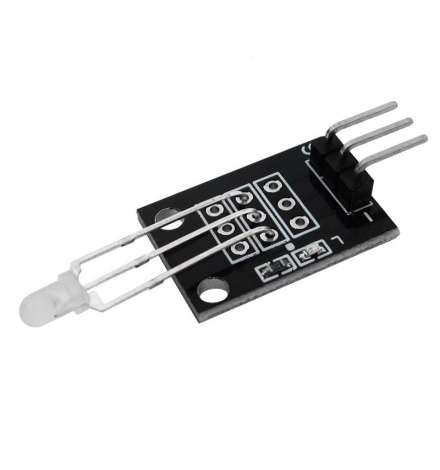
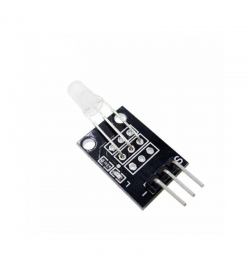
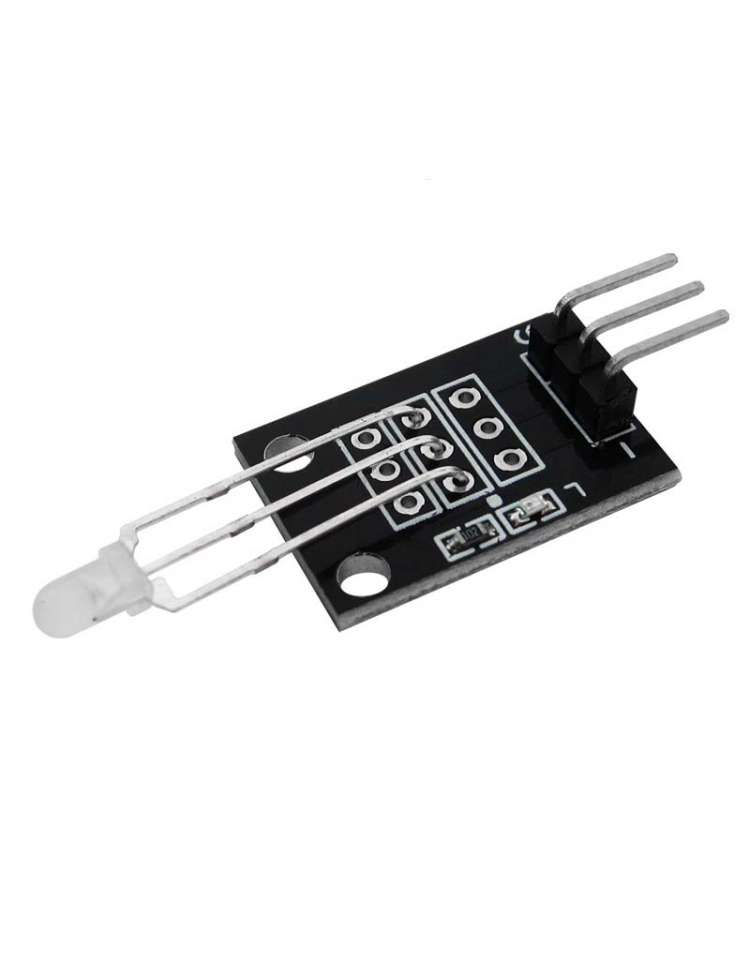
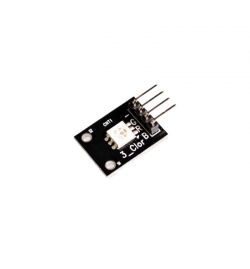
Two Color LED Module (Red and Green) KY-029
The KY-029 (OEM/Keyes) is a dual-color LED module featuring a 3mm red/green common-cathode LED on a compact breakout board. Using PWM on each signal pin, you can independently control red (644nm) and green (571nm) brightness — or blend them for a yellow/amber effect. It is the smaller sibling of the KY-011 (5mm); wiring and code are identical, making it easy to swap between the two.
Key Features
- Dual-color output (Red + Green): Two independent anodes share a common cathode → blend colors with PWM for richer visual feedback
- 3mm diffused package: Wide 150° viewing angle distributes light evenly — ideal for panel indicators or enclosures with small apertures
- Low forward voltage (2.0–2.5V): Works with a simple current-limiting resistor on 5V or 3.3V boards — no level shifter required
- 10mA rated current per color: Low power consumption keeps heat and energy use minimal in battery-powered builds
- Common-cathode design: Single GND pin simplifies wiring — only two signal pins needed to drive both colors
- Wavelengths 571nm (Green) + 644nm (Red): Distinct, saturated hues for clear status indication
- Luminous intensity 20–40 mcd (green) / 40–80 mcd (red): Visible indoors under normal lighting conditions
Pinout & Wiring
| Pin | Symbol | Description |
|---|---|---|
| 1 | GND (–) | Common cathode — connect to board GND |
| 2 | R | Red anode — connect via 220Ω (5V) or 120Ω (3.3V) to digital/PWM pin |
| 3 | G | Green anode — connect via 220Ω (5V) or 120Ω (3.3V) to digital/PWM pin |
Wiring note: Always use a current-limiting resistor on each signal pin. On a 5V Arduino, a 220Ω resistor gives ~13mA per color — safely under the 20mA absolute maximum. On 3.3V boards (ESP32, Raspberry Pi), use 120Ω. A 330Ω resistor also works if you prefer a slightly dimmer output.
Compatibility
- Arduino UNO / Nano / Mega (5V): Use 220Ω resistors on R and G pins. Any digital or PWM-capable pin works.
- ESP32 / ESP8266 / Raspberry Pi (3.3V): Use 120Ω resistors. All three boards support PWM, enabling full color blending.
- Drop-in replacement for KY-011: Same pinout, same code — only the LED diameter differs (3mm vs 5mm).
Typical Applications
- Status indicators: Show OK/Error, On/Off, or Ready/Busy states in green and red — intuitive for any user
- Smart home dashboards: Indicate sensor thresholds (e.g., green = temperature normal, red = overheating alert)
- Robot and vehicle builds: Compact size fits tight spaces; use as power or fault indicators
- Educational Arduino projects: Perfect first PWM exercise — students learn color mixing and GPIO control simultaneously
- Wearables and small enclosures: 3mm form factor fits flush-mount holes in custom 3D-printed cases
Technical Specifications
| Parameter | Value |
|---|---|
| Interface | Digital / PWM |
| Forward Voltage | 2.0–2.5V |
| Rated Current | 10mA per color |
| LED Diameter | 3mm |
| Package Type | Diffusion (diffused lens) |
| Viewing Angle | 150° |
| Wavelength — Green | 571nm |
| Wavelength — Red | 644nm |
| Luminous Intensity — Green | 20–40 mcd |
| Luminous Intensity — Red | 40–80 mcd |
| LED Configuration | Common Cathode |
| MPN | KY-029 |
FAQ
Q: What is the difference between KY-029 and KY-011?
A: Both are dual-color (red/green) common-cathode LED modules with identical pinout and code. The only difference is LED size: KY-029 uses a 3mm LED, KY-011 uses a 5mm LED. Choose KY-029 for tighter spaces.
Q: Do I need a resistor?
A: Yes — always. The forward voltage is 2.0–2.5V, so without a resistor on a 5V or 3.3V board the LED will draw excessive current and burn out. Use 220Ω for 5V boards and 120Ω for 3.3V boards.
⚠ Note: Always use current-limiting resistors on both signal pins before connecting to any microcontroller. Omitting resistors will permanently damage the LED.