- Home
- Catalogues
- List of Supervising Constructions for High School - High School 2025-2026
- Catalogue of Science and Technology Aids 2025-2026
- Design & Technology Catalogue Primary Schools 2024-2025
- Catalogue of Science and Technology Aids 2024-25
- Catalogue of Science and Technology Aids 2023-24
- Christmas Crafts Set
- Nursery Schools Catalogue 2022-2023
- Nursery Schools Catalogue 2020-2021
- Nursery Schools Catalogue 2018-2019
- Happy and Creative Hands
- Jobs Category
- About us
- FAQ
- Terms and conditions of use
- Privacy Policy
- Cookies Policy
- Payment Methods
- Shipping Methods
- Returns Policy
- Payment Response
- Registration Successful
- Shipments to Greece
- New Service Point
- Teacher Registration
- Box Now Shipping Service
- 40 years Antoniadis
- Catalogues
- Catalogues
- About us
- Payment Methods
-
Educational Products
-
School Equipment
- All
- Write 'N' Wipe Boards
- White Magnetic Boards
- Board Erasers & Cleaners
- Interactive Boards
- Cork Boards
- Boards Paper Roll
- Talking Points
- Measuring Instruments
- Rotary Trimmer & Guillotine Machines
- Binding Machines
- Laminators
- Maps
- Literacy
- Time
- Presenters
- Music Instruments
- Batteries
- USB Memory Sticks
- Pocket Charts
- Various
-
Stationery
-
STEM - Robotics - Programming
-
Electronics
-
Educational Toys & Construction Kits
- All
- Mechanics
- Robotics
- Coding
- Simple Circuit Kits
- Science
- Green Science
- Planets
- Dinosaurs - Volcanos
- Animals
- Lenses
- Logic / Understanding
- Card & Board Games
- Rubik's Cubes
- Puzzles
- Magnetic Boards
- Hama Beads
- Painting Sets
- Craft Sets
- Creative Hands
- Soft Play Dough
- Fridge Magnets
- Wooden toys
- Baby Toys
- Gadgets
- Construction "Antoniadis"
- Seasonal
- Birthday Gifts
- Gift Vouchers
-
Tools & Adhesives
-
Craft Materials
- All
- Resin Art, Casting & Sculpting
- Decoupage & Mixed Media
- Items for Decoration
- Model Making & Mockup Supplies
- Creation Materials
- Decoratives
- Paints - Colours
- Mediums & Auxiliaries
- Canvases & Canvas Panels
- Clocks & Accessories
- Cards & Papers
- Fabrics
- Scrapbooking - Papers
- Powertex
- Quilling
- Seasonal
- All
- Acrylics
- Metallic - Pearl
- Chalk Paints
- Oil Paints
- Watercolours - Temperas
- Glass paints
- Fabric Paints
- Pouring Paint Sets
- Face painting
- Lasur Paints
- Chalkboard
- Pencils
- Chalks
- Markers
- Pastel-Crayons
- Outliners
- Alcohol Inks
- Spray
- Pigments for Liquid Glass
- Pigments
- Coloring Books
- Painting by numbers
- Paint Palettes and Containers
-
Art Supplies
Stepper Motor 12V
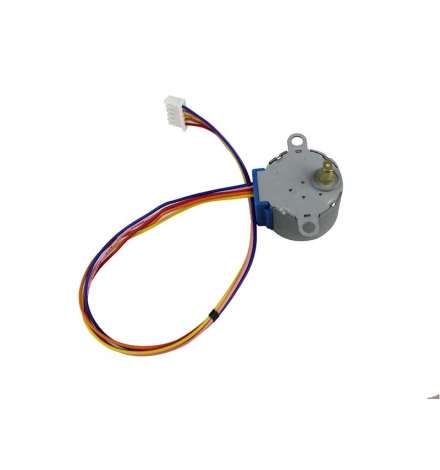
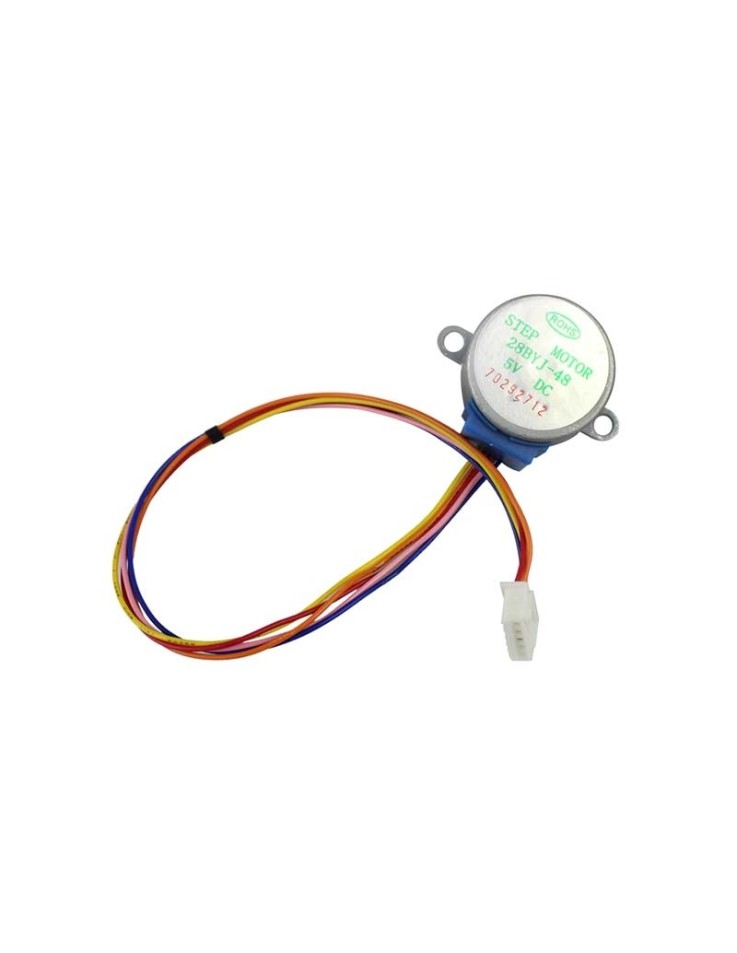
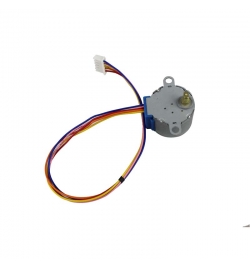
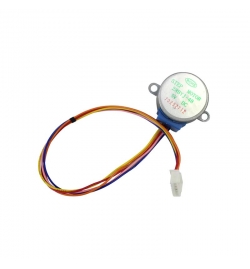
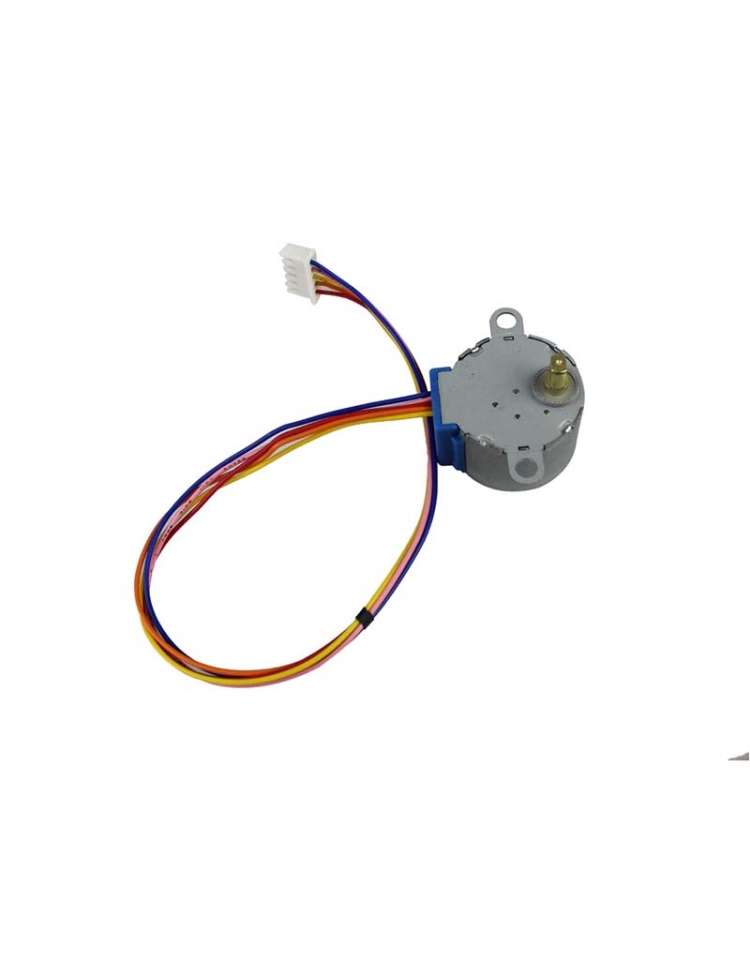
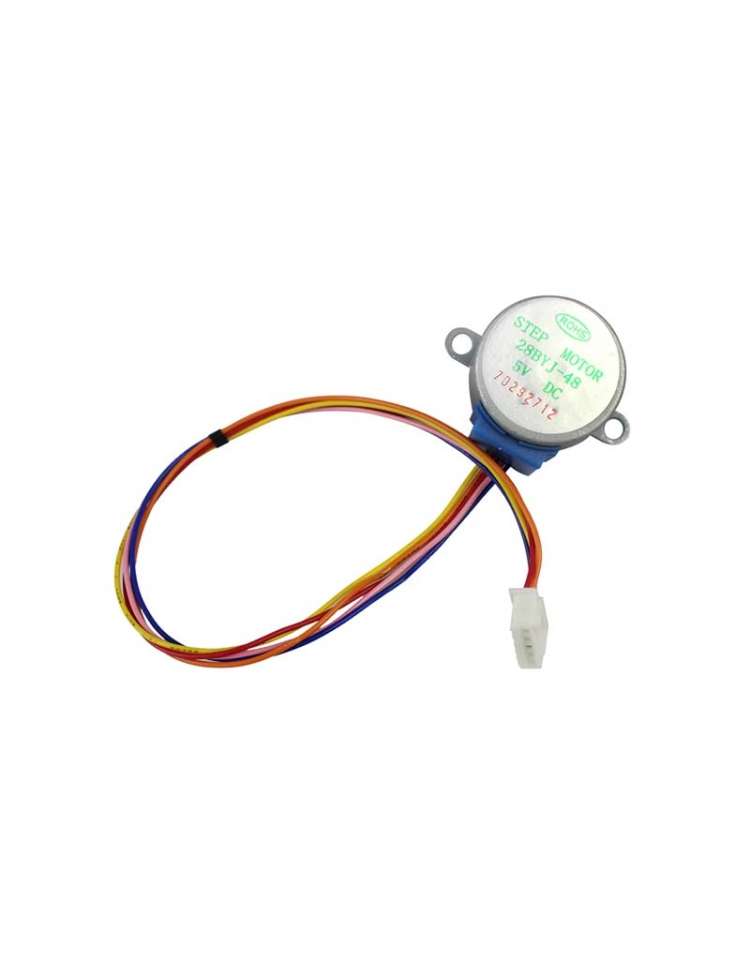
The 28BYJ-48 is a compact 12V unipolar stepper motor — one of the most popular entry-level stepper motors for makers, students, and hobbyists. With its built-in 1/16 reduction gear set and convenient mounting plate, it delivers controlled, precise rotational motion without requiring a complex mechanical setup. The step angle and rotation speed are determined by the frequency of the applied signal, giving you full digital control over movement.
Key Features
- Step Angle: 5.625° → Fine-grained positional control for precise motion applications
- Built-in 1/16 Gear Reduction: Results in 32 × 16.032 = ~513 effective steps per revolution → smoother, more accurate positioning
- Unipolar 4-Phase Design: Simple to drive with standard motor driver boards, ideal for beginners
- Phase Resistance: 200Ω per phase → limits current draw and simplifies driver selection
- Holding Torque: 350 g·cm → sufficient for light mechanical loads such as valves, small arms, or turntables
- Flattened Shaft (5mm diameter): Allows easy attachment of gears or accessories using a set-screw
- Integrated Mounting Plate with 2 Holes: Ready to mount directly into your project enclosure
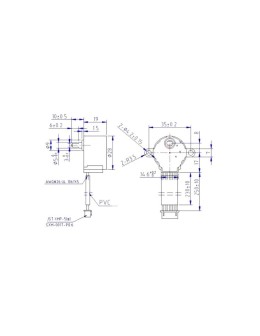
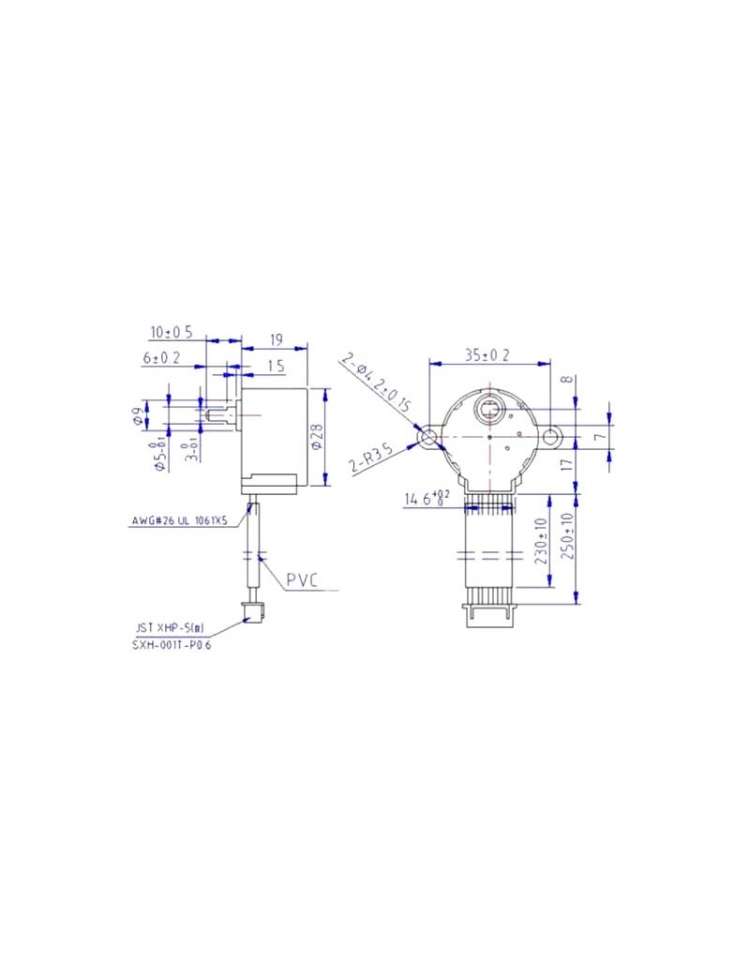
- Compact Form Factor: 28mm body diameter, 20mm height, 37g weight → fits tight spaces
Pinout & Wiring
| Wire Color | Symbol | Description |
|---|---|---|
| Red | VCC | Power supply (12V DC) |
| Orange | A | Coil A1 |
| Yellow | B | Coil B1 |
| Pink | C | Coil A2 |
| Blue | D | Coil B2 |
Wiring note: Connect the Red wire to 12V and the four coil wires to a compatible stepper motor driver (e.g., ULN2003 driver board). Do not drive the coils directly from a microcontroller GPIO pin.
Compatibility
- Arduino UNO / Nano / Mega: Fully compatible when used with a ULN2003 or similar stepper driver board. The Arduino Stepper library or AccelStepper library can control this motor directly.
- Raspberry Pi: Compatible via a ULN2003 driver board using GPIO outputs.
- ESP32 / ESP8266: Compatible via driver board; use 3.3V-tolerant driver inputs or a level shifter.
Typical Applications
- 3D Printer & CNC axis control: Light-duty positioning stages and camera sliders
- Robotics: Joint actuation for small robotic arms or grippers
- Smart home automation: Motorised blinds, valve control, or dial indicators
- Educational projects: Perfect first stepper motor for learning motion control with Arduino
- Camera pan/tilt rigs: Smooth automated camera movement for time-lapse photography
Technical Specifications
| Parameter | Value |
|---|---|
| Motor Type | Unipolar Stepper Motor |
| Model | 28BYJ-48 |
| Supply Voltage | 12V DC |
| Number of Phases | 4 |
| Step Angle | 5.625° |
| Steps per Revolution (with gear) | ~513 (32 × 16.032) |
| Gear Reduction Ratio | 1/16 (approx. 1/16.032) |
| Phase Resistance | 200Ω per phase |
| Holding Torque | 350 g·cm |
| Shaft Diameter | 5mm (flattened) |
| Body Diameter | 28mm |
| Height | 20mm |
| Weight | 37g |
| MPN | 28BYJ-48 |
Frequently Asked Questions
Q: Do I need a separate driver board to use this motor with Arduino?
A: Yes. The 28BYJ-48 requires a driver such as the ULN2003 board to amplify the GPIO signals to the current levels needed by the coils. Never connect the coil wires directly to Arduino pins.
Q: How many steps does the motor actually take per full revolution?
A: With the internal 1/16.032 gear reduction, the motor performs 32 × 16.032 ≈ 513 steps per full revolution of the output shaft, giving very fine positional resolution.
⚠ Note: A motor driver board (e.g., ULN2003) is required and is not included. Always power the motor from an external 12V supply — do not power it directly from the Arduino 5V pin.