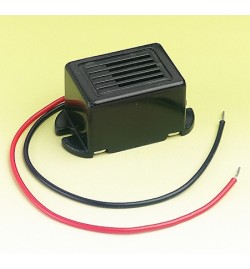
Piezoelectric Buzzer 12v Transducer

Piezoelectric Buzzer 12v Transducer

Buzzers
BUZ043
Part.No: HPE-127
€2.00
In Stock
Immediate Dispatch
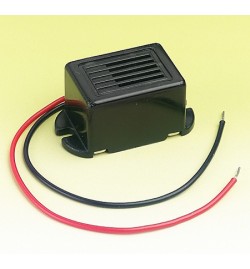
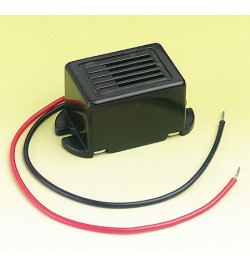
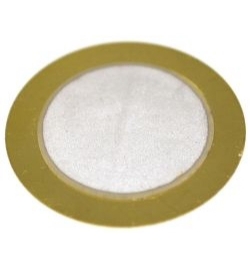
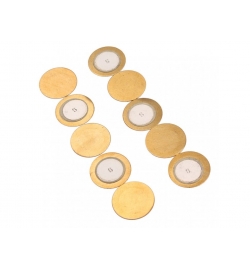
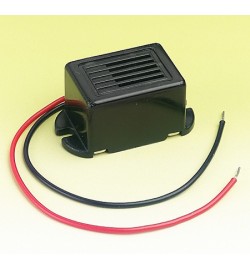
HPE-127 Piezoelectric Buzzer 12V Transducer (externally driven) by OEM. Wide voltage range 3–30V p-p, 4.0kHz tone, 85dB output at 20cm. Compact 30mm disc with 150mm wire leads.


The HPE-127 Piezoelectric Buzzer 12V Transducer is an externally driven piezoelectric buzzer designed for projects that require a reliable, low-current audible alert. Unlike self-driven buzzers, this transducer requires an external oscillator circuit to generate the drive signal — giving you full control over frequency and duty cycle. Its wide operating voltage range of 3–30V p-p makes it versatile across many platforms, while its compact 30mm disc form factor fits easily into enclosures of all sizes.

Κύρια Χαρακτηριστικά / Key Features

  • Externally Driven Type: Requires an external oscillator circuit → gives you full control over tone and timing
  • Wide Voltage Range (3–30V p-p): Works from low-voltage microcontroller outputs up to 30V → compatible with a broad range of circuits
  • Ultra-Low Current Draw (2mA): Minimal impact on your power supply → ideal for battery-powered devices
  • 85dB Sound Output @ 20cm: Clearly audible alarm tone → suitable for alert and notification applications
  • 4.0kHz ± 500Hz Operating Frequency: Standard piezo frequency range → easily driven by PWM or 555-timer circuits
  • 150mm Red & Black Wire Leads: Pre-wired with colour-coded leads → quick and easy integration
  • Compact Form Factor (30mm dia. × 6.5mm h.): Fixing centres at 35.5mm → straightforward panel mounting
  • Wide Temperature Range (−20°C to +65°C): Reliable operation in indoor and outdoor environments

Compatibility

  • Arduino UNO / Nano (5V): Drive directly with a PWM-capable digital pin via a transistor or logic-level MOSFET; 5V falls within the 3–30V operating range.
  • ESP32 / ESP8266 (3.3V): 3.3V p-p is at the lower end of the specified range; use a transistor driver stage for reliable sound output.
  • Raspberry Pi (3.3V GPIO): Same recommendation as ESP32 — a small NPN transistor or MOSFET ensures sufficient drive.
  • 555-Timer Circuits / Discrete Oscillators: Ideal pairing; the HPE-127 is designed specifically for externally generated oscillator signals.
  • 12V Systems (Automotive / Industrial): 12V is well within spec and delivers the rated 85dB output — perfect for alarm and indicator panels.

Typical Applications

  • Security & alarm systems: Panel-mounted audible alert for intruder or fire alarm panels
  • Industrial equipment indicators: Process fault or status notification in machinery
  • Arduino / ESP32 maker projects: Custom tones and beep sequences via PWM output
  • Battery-powered IoT devices: Low 2mA draw preserves battery life while still providing clear alerts
  • Automotive & 12V applications: Reverse warning, door-open chime, or general dashboard alert

Technical Specifications

ParameterValue
Drive TypeExternally driven (oscillator required)
Operating Voltage3 – 30V p-p
Operating Current2 mA
Oscillating Frequency4.0kHz ± 500Hz
Sound Output (min)85 dB @ 20cm / 12V p-p
Temperature Range−20°C to +65°C
Wire LeadsRed & Black, 150mm
Fixing Centres35.5mm
Dimensions30mm dia. × 6.5mm h.
Weight6g
MPNHPE-127

FAQ

Q: Can I connect this buzzer directly to a microcontroller GPIO pin?
A: Not recommended without a driver stage. Because the HPE-127 is externally driven, you need an oscillator signal (e.g. PWM from Arduino). Always use a transistor or MOSFET to avoid drawing excessive current from the GPIO pin.

Q: What is the difference between this transducer and a self-driven buzzer?
A: A self-driven buzzer contains an internal oscillator and produces sound when DC voltage is applied. The HPE-127 is a transducer — it needs an AC or PWM signal from an external circuit, but in return you can control the frequency and pattern of the sound.

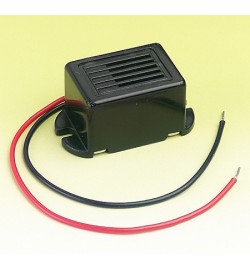
Package Contents: 1× HPE-127 Piezoelectric Buzzer Transducer with 150mm wire leads.
⚠ Note: This is an externally driven transducer. Applying DC voltage alone will NOT produce sound. An external oscillator or PWM signal is required.
Product added to wishlist
Product added to compare.