- Home
- Catalogues
- List of Supervising Constructions for High School - High School 2025-2026
- Catalogue of Science and Technology Aids 2025-2026
- Design & Technology Catalogue Primary Schools 2024-2025
- Catalogue of Science and Technology Aids 2024-25
- Catalogue of Science and Technology Aids 2023-24
- Christmas Crafts Set
- Nursery Schools Catalogue 2022-2023
- Nursery Schools Catalogue 2020-2021
- Nursery Schools Catalogue 2018-2019
- Happy and Creative Hands
- Jobs Category
- About us
- FAQ
- Terms and conditions of use
- Privacy Policy
- Cookies Policy
- Payment Methods
- Shipping Methods
- Returns Policy
- Payment Response
- Registration Successful
- Shipments to Greece
- New Service Point
- Teacher Registration
- Box Now Shipping Service
- 40 years Antoniadis
- Catalogues
- Catalogues
- About us
- Payment Methods
-
Educational Products
-
School Equipment
- All
- Write 'N' Wipe Boards
- White Magnetic Boards
- Board Erasers & Cleaners
- Interactive Boards
- Cork Boards
- Boards Paper Roll
- Talking Points
- Measuring Instruments
- Rotary Trimmer & Guillotine Machines
- Binding Machines
- Laminators
- Maps
- Literacy
- Time
- Presenters
- Music Instruments
- Batteries
- USB Memory Sticks
- Pocket Charts
- Various
-
Stationery
-
STEM - Robotics - Programming
-
Electronics
-
Educational Toys & Construction Kits
- All
- Mechanics
- Robotics
- Coding
- Simple Circuit Kits
- Science
- Green Science
- Planets
- Dinosaurs - Volcanos
- Animals
- Lenses
- Logic / Understanding
- Card & Board Games
- Rubik's Cubes
- Puzzles
- Magnetic Boards
- Hama Beads
- Painting Sets
- Craft Sets
- Creative Hands
- Soft Play Dough
- Fridge Magnets
- Wooden toys
- Baby Toys
- Gadgets
- Construction "Antoniadis"
- Seasonal
- Birthday Gifts
- Gift Vouchers
-
Tools & Adhesives
-
Craft Materials
- All
- Resin Art, Casting & Sculpting
- Decoupage & Mixed Media
- Items for Decoration
- Model Making & Mockup Supplies
- Creation Materials
- Decoratives
- Paints - Colours
- Mediums & Auxiliaries
- Canvases & Canvas Panels
- Clocks & Accessories
- Cards & Papers
- Fabrics
- Scrapbooking - Papers
- Powertex
- Quilling
- Seasonal
- All
- Acrylics
- Metallic - Pearl
- Chalk Paints
- Oil Paints
- Watercolours - Temperas
- Glass paints
- Fabric Paints
- Pouring Paint Sets
- Face painting
- Lasur Paints
- Chalkboard
- Pencils
- Chalks
- Markers
- Pastel-Crayons
- Outliners
- Alcohol Inks
- Spray
- Pigments for Liquid Glass
- Pigments
- Coloring Books
- Painting by numbers
- Paint Palettes and Containers
-
Art Supplies
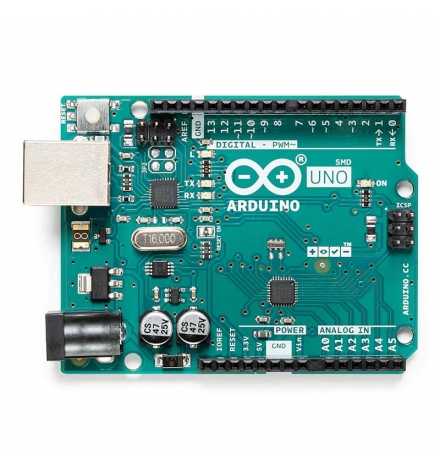
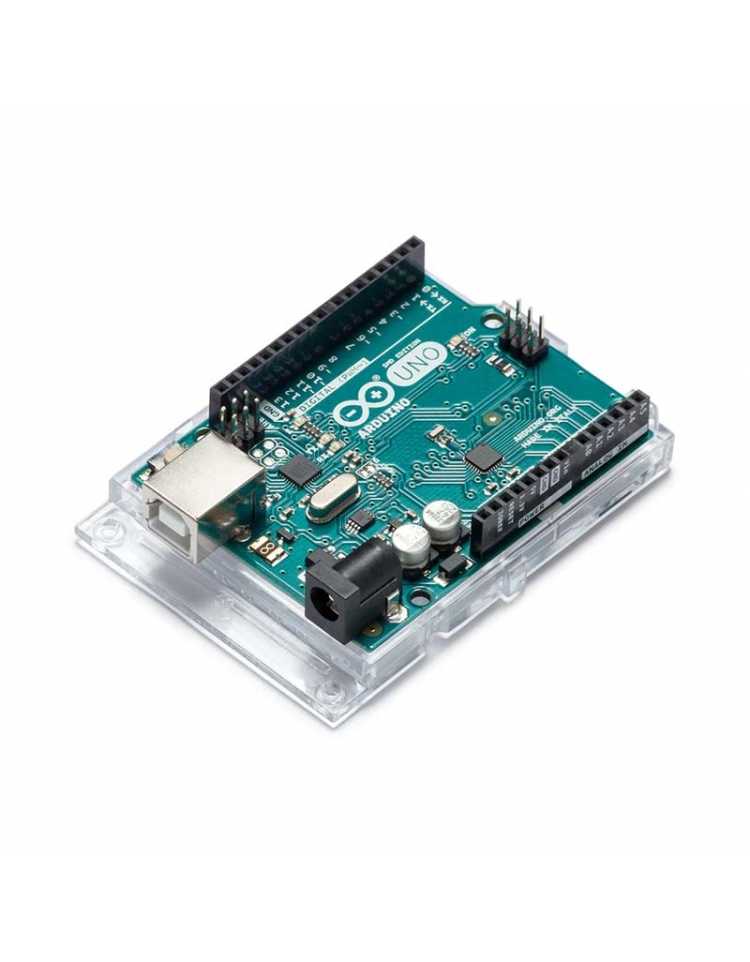
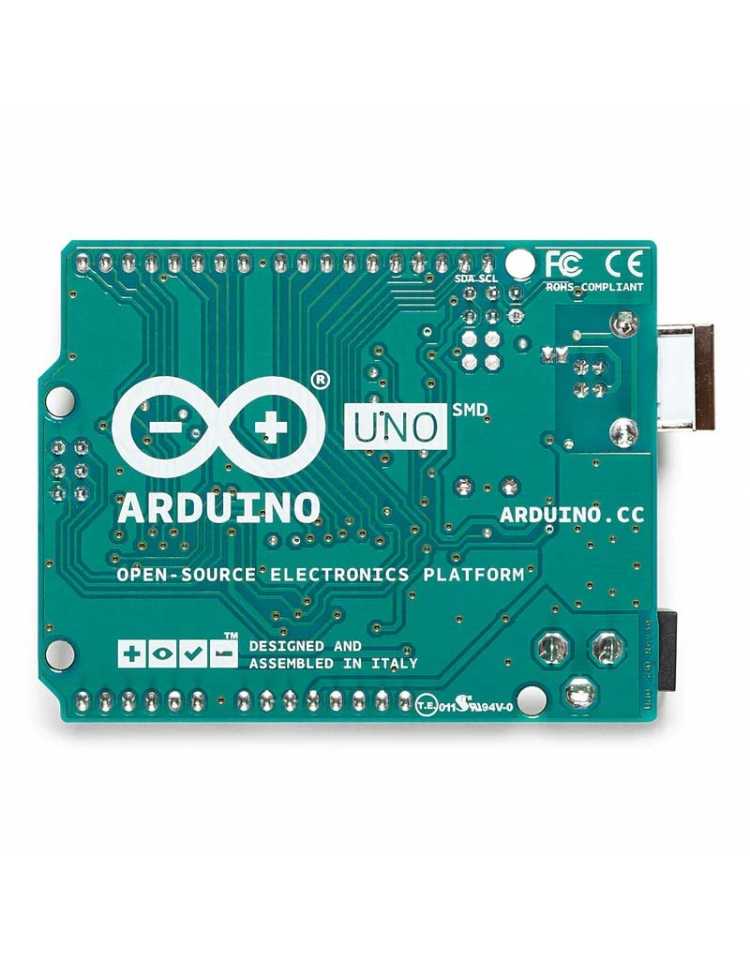
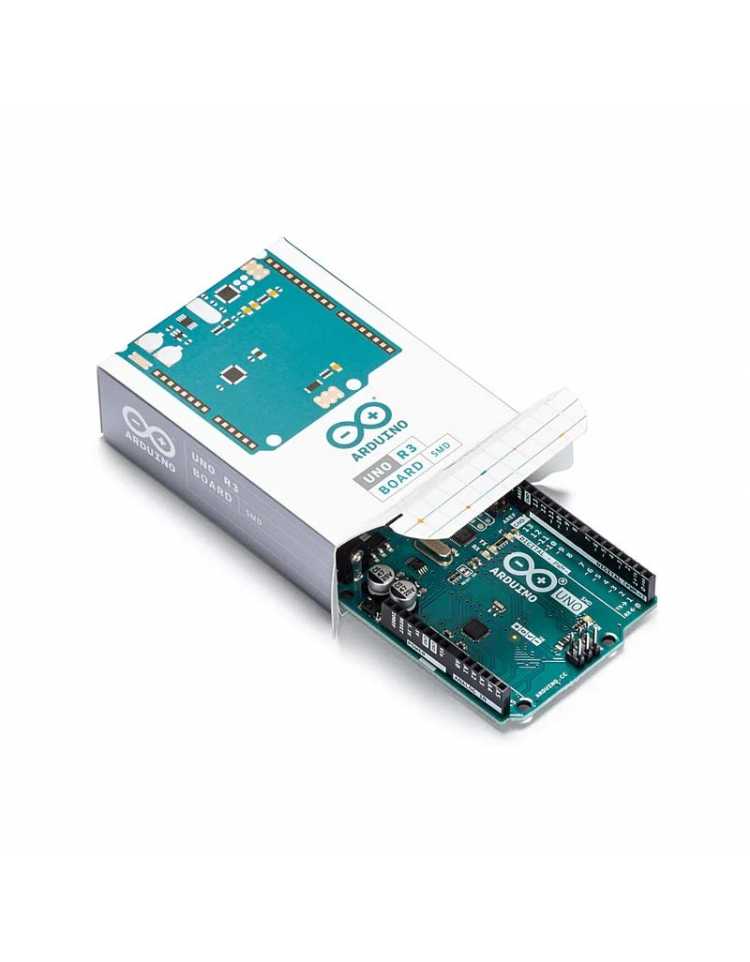
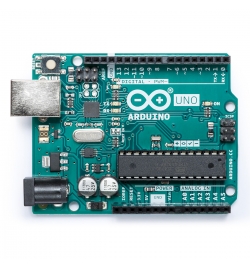
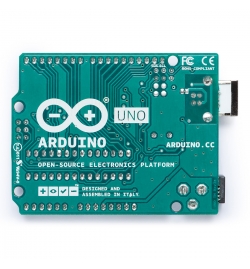
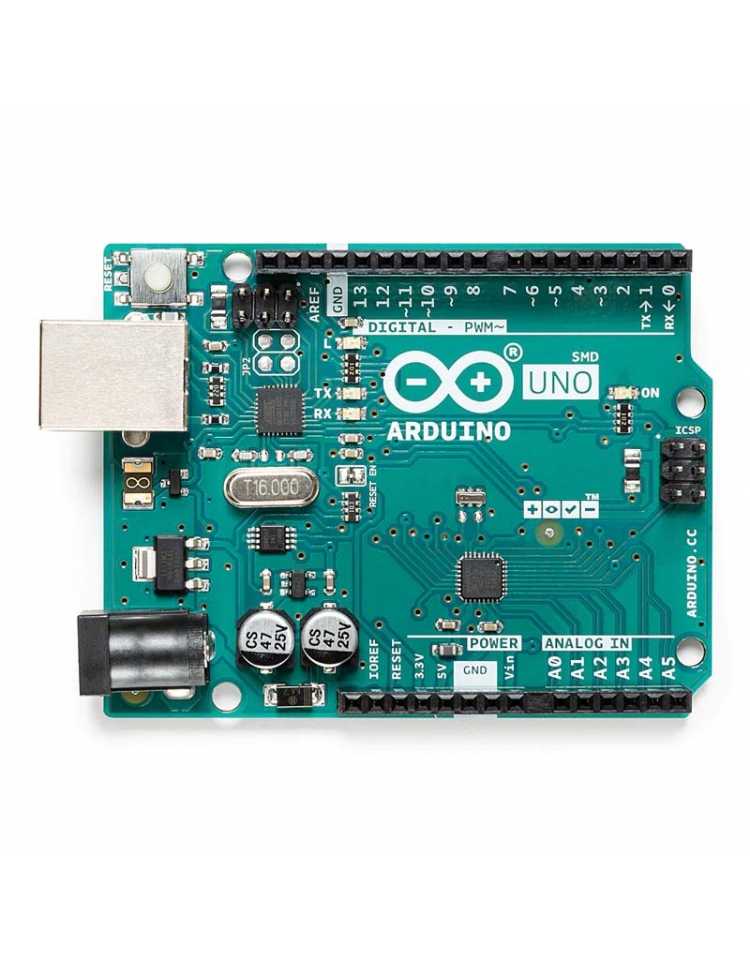
Arduino UNO Rev3 Board SMD
The Arduino UNO Rev3 SMD is the surface-mount edition of the classic UNO — Surface-Mount ATmega328P, same pinout, same full compatibility with shields and libraries, without the socketed DIP chip. Preferred by makers and engineers who don't need chip replacement capability.
- ⚙️ ATmega328P SMD @ 16MHz — identical capabilities to the classic UNO Rev3
- 🔌 14 digital I/O (6 PWM), 6 analog inputs, 5V operation
- 📐 68.6×53.4mm, 25g — same form factor as UNO Rev3
- 🇨🇾 Fast shipping within Cyprus
Arduino UNO Rev3 SMD — The Classic UNO with Surface-Mount ATmega328P
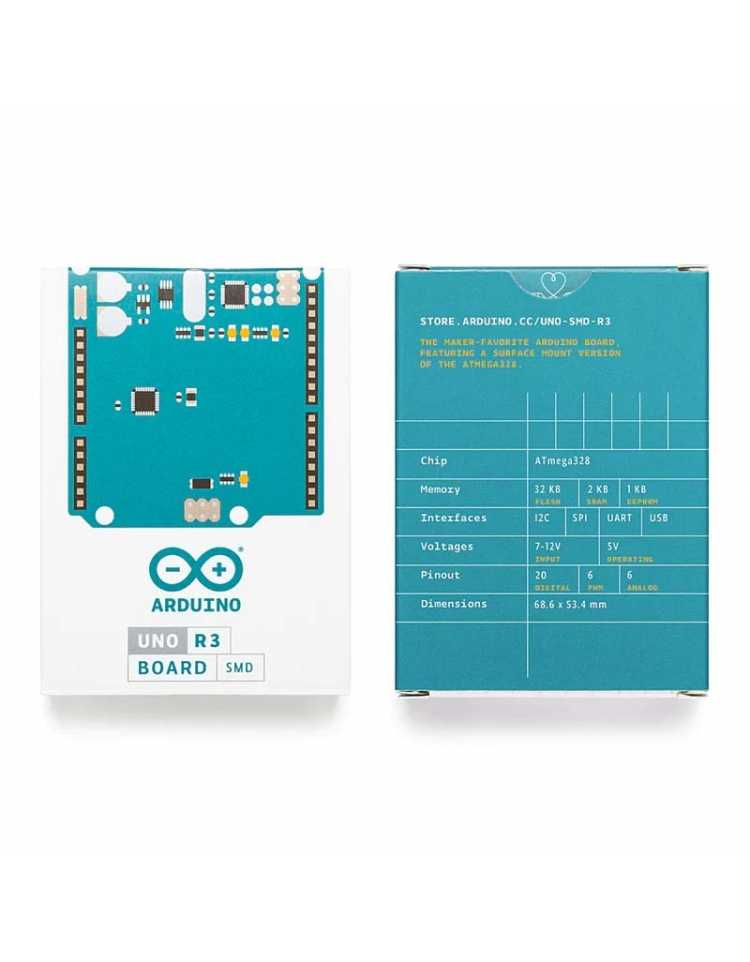
The Arduino UNO Rev3 SMD (SKU: A000073) is electronically identical to the classic Arduino UNO Rev3 (A000066) — same ATmega328P microcontroller @ 16MHz, same pinout, same full compatibility with shields, libraries, and the Arduino IDE. The single difference: the ATmega328P is Surface-Mount (SMD) rather than DIP, meaning it is permanently soldered to the PCB without a socket. This makes it a more compact choice for applications where chip replacement is not a requirement.
Technical Specifications
| Feature | Specification |
|---|---|
| Microcontroller | ATmega328P (SMD — permanently soldered) |
| Operating Voltage | 5V |
| Input Voltage (recommended) | 7–12V |
| Input Voltage (limit) | 6–20V |
| Digital I/O Pins | 14 (of which 6 provide PWM) |
| Analog Input Pins | 6 |
| DC Current per I/O Pin | 20 mA |
| DC Current for 3.3V Pin | 50 mA |
| Flash / SRAM / EEPROM | 32 kB (0.5kB bootloader) / 2 kB / 1 kB |
| Clock Speed | 16 MHz |
| Dimensions / Weight | 68.6mm × 53.4mm / 25g |
DIP vs SMD — What's the difference in practice?
On the classic UNO Rev3 (A000066), the ATmega328P sits in a DIP socket and can be removed and replaced. On the UNO Rev3 SMD, the same chip is permanently soldered (SMD) to the PCB — a more compact build, equally reliable, without chip replacement capability. For education and prototyping, both versions are functionally identical.
Who is it for?
- Schools & educational institutions: Functionally identical to the UNO Rev3 — same sketches, same shields, same tutorials. Ideal for STEM and Computer Science labs where chip replacement is not a requirement.
- Students: If you're already familiar with the Arduino IDE, the UNO Rev3 SMD programs and operates exactly like the classic UNO. No compromise on functionality.
- Makers & engineers: The SMD version is preferred for embedding in custom enclosures and production projects where a compact build without a protruding DIP socket is an advantage. Combines with shields, sensors, and modules exactly like the DIP UNO.
See Also
- Arduino Official Boards (Genuine) — The full range of genuine Arduino boards
- Arduino Shields — Fully compatible with the UNO Rev3 SMD
- Arduino Starter Kits — Everything you need to get started
- Arduino Sensors — Add sensing to your projects
Frequently Asked Questions
What is the difference between Arduino UNO Rev3 SMD (A000073) and Arduino UNO Rev3 (A000066)?
The two boards are electronically identical — same ATmega328P, same pinout, same functionality. The only difference is that the ATmega328P on the A000073 is SMD (permanently soldered), whereas on the A000066 it is DIP (removable). If you do not plan to replace the chip, the two versions are practically the same.
Can I use the same shields and libraries as the classic UNO Rev3?
Yes, absolutely. The UNO Rev3 SMD has the same pinout and full compatibility with all Arduino shields, libraries, and tutorials written for the UNO.
Why choose the SMD version over the DIP version?
If you don't need to replace the ATmega328P (e.g. after a fault), the SMD version is equally reliable and is preferred by engineers for applications where a compact build without a protruding DIP socket is an advantage.