
 Ελληνικά
Your cart
There are no more items in your cart
-
 Educational Products
-
 School Equipment
- All
- Write 'N' Wipe Boards
- White Magnetic Boards
- Board Erasers & Cleaners
- Interactive Boards
- Cork Boards
- Boards Paper Roll
- Talking Points
- Measuring Instruments
- Rotary Trimmer & Guillotine Machines
- Binding Machines
- Laminators
- Maps
- Literacy
- Time
- Presenters
- Music Instruments
- Batteries
- USB Memory Sticks
- Pocket Charts
- Various
-
 Stationery
-
 STEM - Robotics - Programming
-
 Electronics
-
 Educational Toys & Construction Kits
- All
- Mechanics
- Robotics
- Coding
- Simple Circuit Kits
- Science
- Green Science
- Planets
- Dinosaurs - Volcanos
- Animals
- Lenses
- Logic / Understanding
- Card & Board Games
- Rubik's Cubes
- Puzzles
- Magnetic Boards
- Hama Beads
- Painting Sets
- Craft Sets
- Creative Hands
- Soft Play Dough
- Fridge Magnets
- Wooden toys
- Baby Toys
- Gadgets
- Construction "Antoniadis"
- Seasonal
- Birthday Gifts
- Gift Vouchers
-
 Tools & Adhesives
-
 Craft Materials
- All
- Resin Art, Casting & Sculpting
- Decoupage & Mixed Media
- Items for Decoration
- Model Making & Mockup Supplies
- Creation Materials
- Decoratives
- Paints - Colours
- Mediums & Auxiliaries
- Canvases & Canvas Panels
- Clocks & Accessories
- Cards & Papers
- Fabrics
- Scrapbooking - Papers
- Powertex
- Quilling
- Seasonal
- All
- Acrylics
- Metallic - Pearl
- Chalk Paints
- Oil Paints
- Watercolours - Temperas
- Glass paints
- Fabric Paints
- Pouring Paint Sets
- Face painting
- Lasur Paints
- Chalkboard
- Pencils
- Chalks
- Markers
- Pastel-Crayons
- Outliners
- Alcohol Inks
- Spray
- Pigments for Liquid Glass
- Pigments
- Coloring Books
- Painting by numbers
- Paint Palettes and Containers
-
 Art Supplies

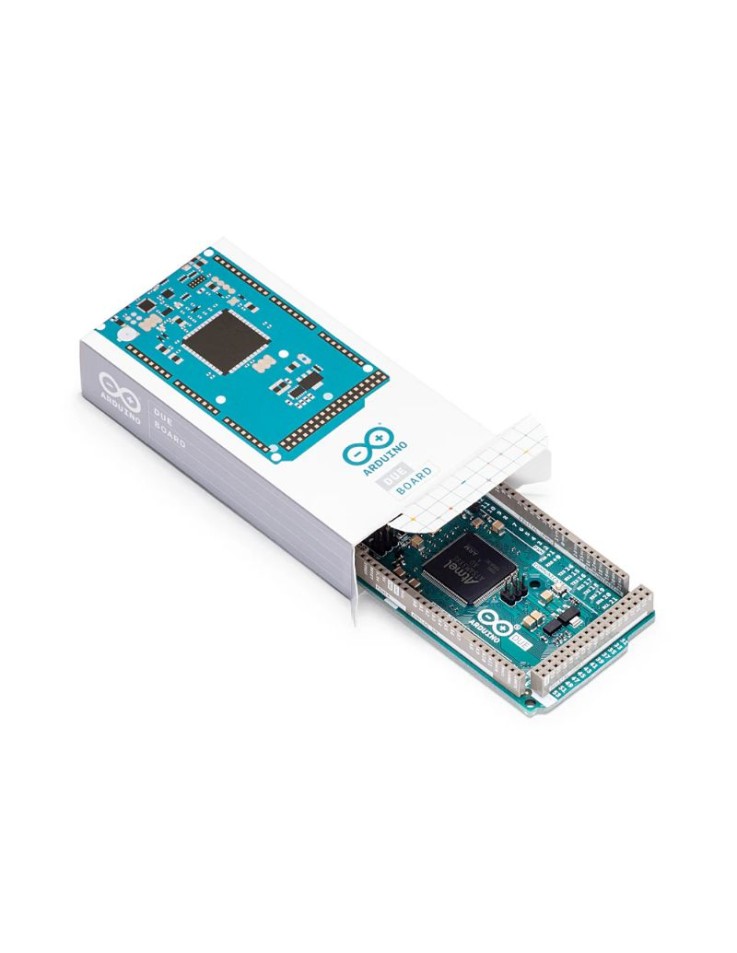
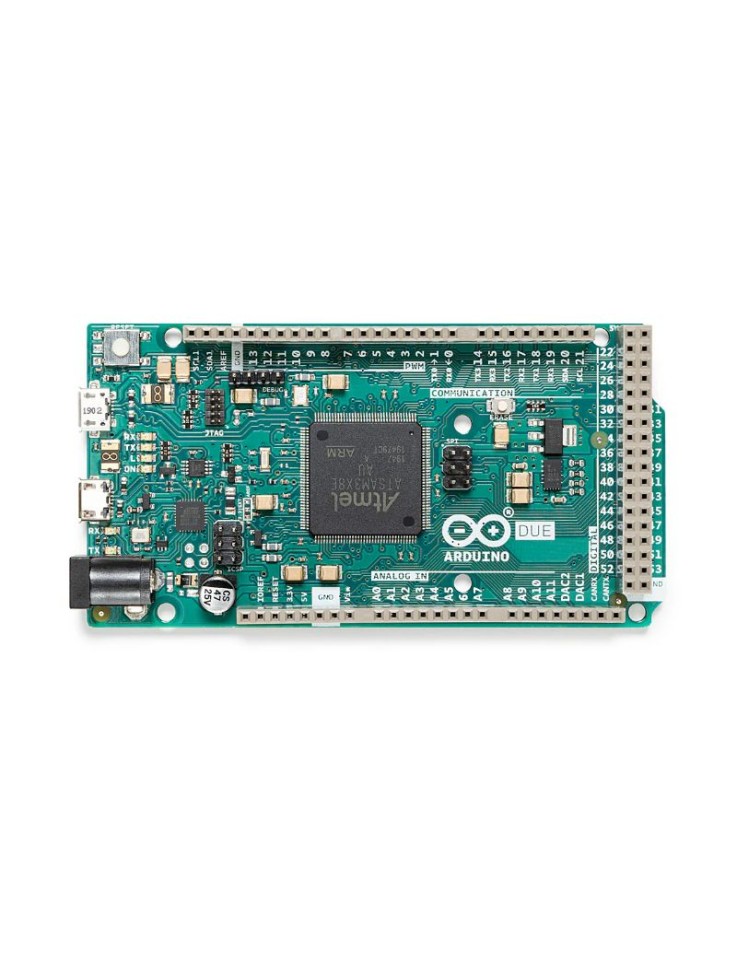

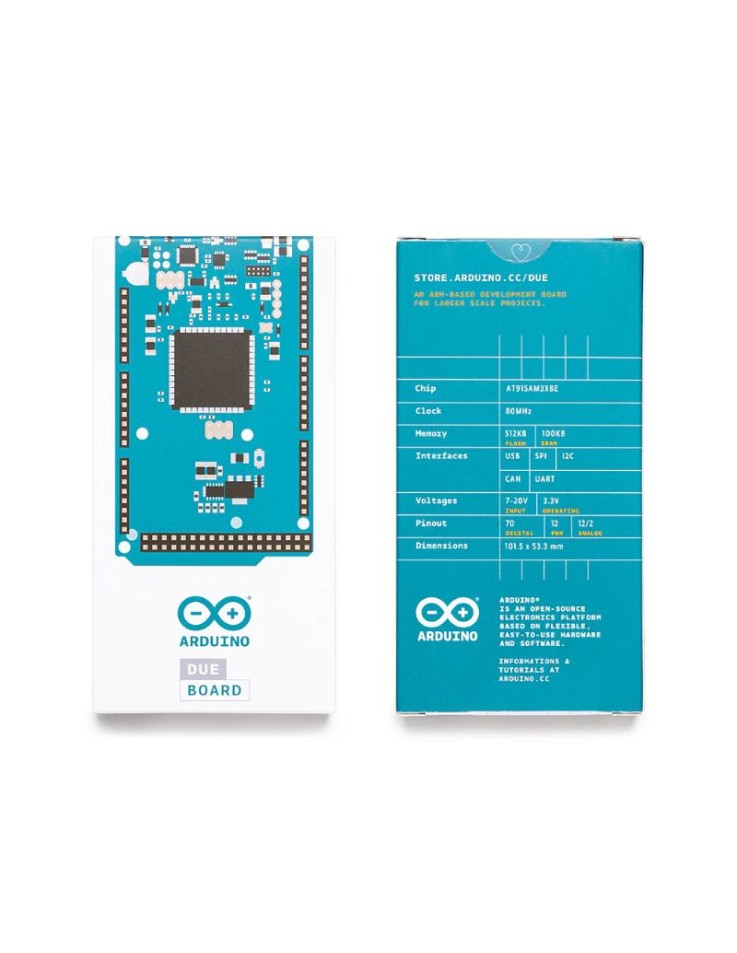
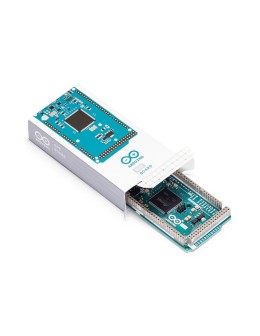


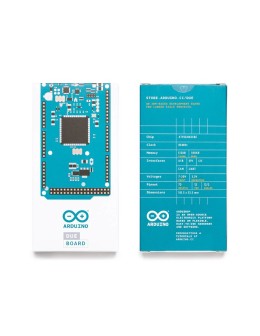


Arduino Due
Main boards & Kits
ARD055
Part.No: A000062
€58.50
Delivered within 2-3 days
The Arduino Due is the most powerful classic Arduino board — based on the 32-bit ARM Cortex-M3 AT91SAM3X8E @ 84MHz with 512KB Flash, 96KB SRAM, 54 digital I/O, and dual DAC outputs. Ideal for demanding signal processing, robotics, and multitasking projects. Important: operates at 3.3V I/O.
- 🚀 32-bit ARM Cortex-M3 @ 84MHz — the most processing power in classic Arduino
- 💾 512KB Flash, 96KB SRAM, 2× DAC, 12 analog inputs
- 🔌 54 digital I/O (12 PWM), USB OTG, 4× UART, SPI, I2C, CAN
- ⚠️ I/O voltage is 3.3V — do NOT connect 5V signals directly
Subscribe To When In Stock
You have successfully subscribed to this product
Arduino Due — The Most Powerful Classic Arduino with 32-bit ARM Cortex-M3
The Arduino Due (SKU: A000062) marked a historic milestone for Arduino: it was the first board based on a 32-bit ARM architecture, featuring the AT91SAM3X8E @ 84MHz with 512KB Flash and 96KB SRAM. With 54 digital I/O pins, 12 analog inputs, 2 DAC outputs, and a rich set of communication interfaces (USB OTG, 4× UART, SPI, I2C, CAN), the Due is the choice for demanding applications that push beyond the limits of the UNO. Critical note: I/O pins operate at 3.3V — they are not 5V-tolerant.
Technical Specifications
| Feature | Specification |
|---|---|
| Microcontroller | Atmel AT91SAM3X8E (32-bit ARM Cortex-M3) |
| Clock Speed | 84 MHz |
| Flash / SRAM | 512 kB / 96 kB (two banks: 64kB + 32kB) |
| I/O Operating Voltage | 3.3V (NOT 5V-tolerant) |
| Input Voltage (VIN) | 7–12V (recommended) / 6–16V (limit) |
| Digital I/O Pins | 54 (12 PWM) |
| Analog Input Pins | 12 |
| Analog Output (DAC) | 2 |
| Total DC Output (I/O) | 130 mA |
| DC 3.3V / 5V Pin | 800 mA / 800 mA |
| Communication | 4× UART, 2× I2C, SPI, CAN, USB OTG |
| USB | 2× Micro-USB (Programming + Native USB OTG) |
| Dimensions / Weight | 101.52mm × 53.3mm / 36g |
⚠️ Critical: 3.3V I/O — Not 5V-tolerant
Unlike the UNO, Nano, and Mega (which operate at 5V), the Arduino Due's I/O pins operate at 3.3V and are not 5V-tolerant. Connecting a 5V signal to a Due I/O pin can permanently damage the microcontroller. If you are using 5V sensors, shields, or modules, a level shifter is required. Browse our modules for compatible options.
Who is it for?
- Advanced students & engineers: The Due is the choice when the UNO is not enough — audio processing, FFT, real-time control systems, robotics with many servo motors (up to 54 digital pins), and applications requiring 32-bit floating point operations.
- Educational institutions: Ideal for advanced embedded systems and real-time programming courses at university level. The ARM Cortex-M3 architecture is the same used in industrial applications, giving students industry-relevant experience.
- Makers & researchers: Dual DAC output for audio generation, 12 analog inputs for multi-sensor data acquisition, USB OTG for connecting USB peripherals — the Due unlocks capabilities unavailable on any other classic Arduino board. Pair it with sensors and displays for complete data logging systems.
See Also
- Arduino Official Boards (Genuine) — The full range of genuine Arduino boards
- Arduino Modules — Level shifters and expansions for the Due
- Arduino Sensors — 3.3V-compatible sensors for the Due
- Arduino Displays — Visualise data for advanced projects
Frequently Asked Questions
Are UNO shields compatible with the Arduino Due?
Partially. The Due shares the same form factor as the UNO Mega, so shields fit physically. However, since I/O operates at 3.3V, shields designed for 5V may not work correctly or could damage the board. Always verify voltage compatibility before connecting any shield.
What is the difference between Arduino Due and Arduino Mega 2560?
Both have many I/O pins, but differ fundamentally: the Due uses a 32-bit ARM Cortex-M3 @ 84MHz with 3.3V I/O, while the Mega 2560 uses an 8-bit ATmega2560 @ 16MHz with 5V I/O. The Due is significantly faster with more memory, but requires careful attention to voltage compatibility.
Does the Arduino Due have EEPROM?
No. The AT91SAM3X8E does not include EEPROM. However, you can use the board's Flash memory for data storage (via the DueFlashStorage library) or an external EEPROM module connected via I2C or SPI.
Tap to zoom
