- Home
- Catalogues
- List of Supervising Constructions for High School - High School 2025-2026
- Catalogue of Science and Technology Aids 2025-2026
- Design & Technology Catalogue Primary Schools 2024-2025
- Catalogue of Science and Technology Aids 2024-25
- Catalogue of Science and Technology Aids 2023-24
- Christmas Crafts Set
- Nursery Schools Catalogue 2022-2023
- Nursery Schools Catalogue 2020-2021
- Nursery Schools Catalogue 2018-2019
- Happy and Creative Hands
- Jobs Category
- About us
- FAQ
- Terms and conditions of use
- Privacy Policy
- Cookies Policy
- Payment Methods
- Shipping Methods
- Returns Policy
- Payment Response
- Registration Successful
- Shipments to Greece
- New Service Point
- Teacher Registration
- Box Now Shipping Service
- 40 years Antoniadis
- Catalogues
- Catalogues
- About us
- Payment Methods
-
Educational Products
-
School Equipment
- All
- Write 'N' Wipe Boards
- White Magnetic Boards
- Board Erasers & Cleaners
- Interactive Boards
- Cork Boards
- Boards Paper Roll
- Talking Points
- Measuring Instruments
- Rotary Trimmer & Guillotine Machines
- Binding Machines
- Laminators
- Maps
- Literacy
- Time
- Presenters
- Music Instruments
- Batteries
- USB Memory Sticks
- Pocket Charts
- Various
-
Stationery
-
STEM - Robotics - Programming
-
Electronics
-
Educational Toys & Construction Kits
- All
- Mechanics
- Robotics
- Coding
- Simple Circuit Kits
- Science
- Green Science
- Planets
- Dinosaurs - Volcanos
- Animals
- Lenses
- Logic / Understanding
- Card & Board Games
- Rubik's Cubes
- Puzzles
- Magnetic Boards
- Hama Beads
- Painting Sets
- Craft Sets
- Creative Hands
- Soft Play Dough
- Fridge Magnets
- Wooden toys
- Baby Toys
- Gadgets
- Construction "Antoniadis"
- Seasonal
- Birthday Gifts
- Gift Vouchers
-
Tools & Adhesives
-
Craft Materials
- All
- Resin Art, Casting & Sculpting
- Decoupage & Mixed Media
- Items for Decoration
- Model Making & Mockup Supplies
- Creation Materials
- Decoratives
- Paints - Colours
- Mediums & Auxiliaries
- Canvases & Canvas Panels
- Clocks & Accessories
- Cards & Papers
- Fabrics
- Scrapbooking - Papers
- Powertex
- Quilling
- Seasonal
- All
- Acrylics
- Metallic - Pearl
- Chalk Paints
- Oil Paints
- Watercolours - Temperas
- Glass paints
- Fabric Paints
- Pouring Paint Sets
- Face painting
- Lasur Paints
- Chalkboard
- Pencils
- Chalks
- Markers
- Pastel-Crayons
- Outliners
- Alcohol Inks
- Spray
- Pigments for Liquid Glass
- Pigments
- Coloring Books
- Painting by numbers
- Paint Palettes and Containers
-
Art Supplies
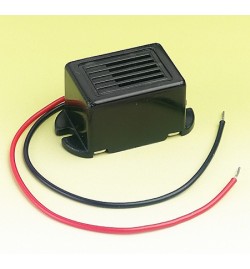
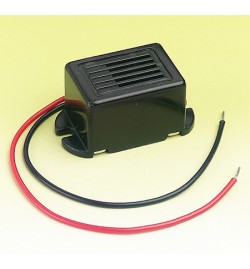
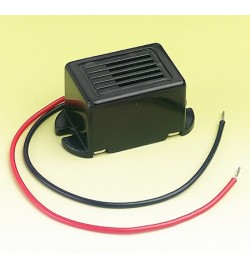
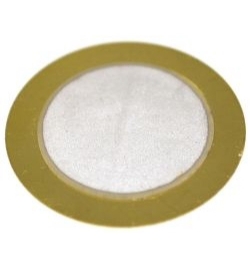
Buzzer 5V
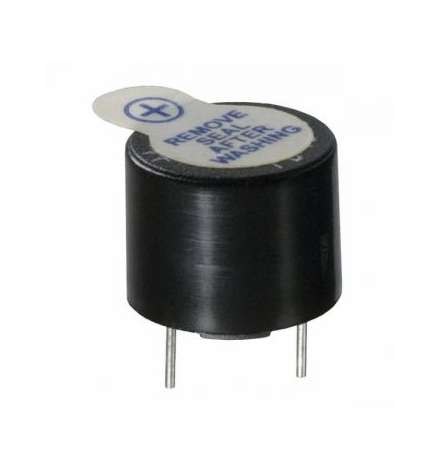
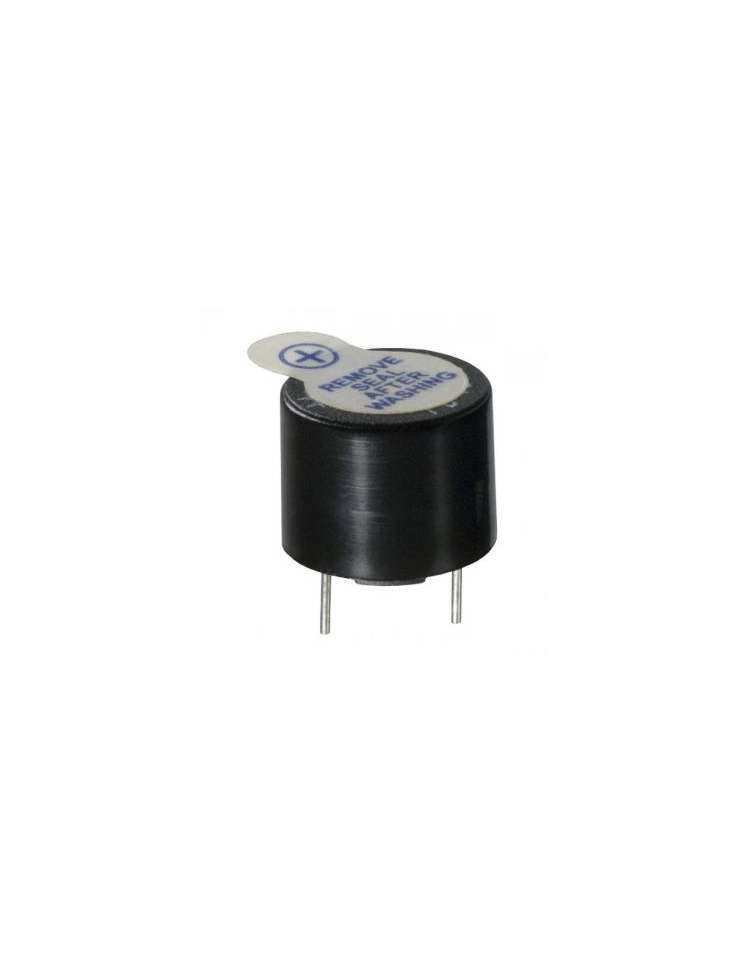
The 5V Electromagnetic Buzzer (Ref: BUZ024) is a self-driven, through-hole buzzer with a built-in oscillator circuit — meaning it produces a continuous 2.3 kHz tone as soon as voltage is applied, no external signal generation required. Operating across a wide 3–7 V supply range with a nominal 5 V, it fits naturally into 5 V microcontroller systems. Its compact ø12 × 9.5 mm form factor and standard through-hole pins make it a practical choice for PCB integration or breadboard prototyping.
Key Features
- Built-in Generator: Produces a continuous tone without any PWM signal from the microcontroller → simplifies firmware
- Wide Supply Range (3–7 V): Tolerates voltage fluctuations → reliable in battery-powered and regulated-supply designs
- 85 dB Sound Output @ 30 cm: Loud enough for audible alerts in typical workshop or classroom environments → effective feedback without amplification
- 2.3 kHz Operating Frequency: Sits within the most sensitive range of human hearing → maximises perceived loudness at minimal power
- 30 mA Current Consumption: Driveable directly from a microcontroller I/O pin via a transistor or directly where pin current limits allow → no extra driver IC needed in many designs
- Through-Hole PCB Mount: Standard pin spacing for easy soldering or breadboard insertion → quick prototyping and permanent installation
- Compact Size (ø12 × 9.5 mm, 2 g): Minimal board footprint → fits space-constrained enclosures
Pinout & Wiring
| PIN | Symbol | Description |
|---|---|---|
| Long lead (+) | VCC | Positive supply — connect to 3–7 V (typically 5 V) |
| Short lead (−) | GND | Ground — connect to system GND |
Wiring note: Because the buzzer draws up to 30 mA, drive it through an NPN transistor (e.g. 2N2222 or BC547) controlled by a digital I/O pin when using microcontrollers with a 20–40 mA pin current limit. Connect the I/O pin → base resistor (1 kΩ) → transistor base; collector → buzzer (−); emitter → GND; buzzer (+) → 5 V.
Compatibility
- Arduino UNO / Nano / Mega (5 V): Direct voltage match — use a transistor driver to stay within safe I/O pin current limits.
- ESP32 / ESP8266 / Raspberry Pi (3.3 V logic): The buzzer operates down to 3 V, so a 3.3 V supply will activate it; use a transistor to protect the 3.3 V I/O pin from the 30 mA draw.
- Standalone / Battery circuits: Compatible with 3× AA (4.5 V) or single Li-ion (3.7 V) supplies within the 3–7 V range.
Typical Applications
- Arduino alarm & notification projects: Sound a tone when a sensor threshold is crossed (temperature, motion, water level).
- Educational kits & STEM workshops: Introduce students to basic output devices and transistor switching circuits.
- Breadboard & prototype testing: Quick audible confirmation that a circuit condition has been met during development.
- Door / access control indicators: Simple open/close or access-granted/denied beep feedback.
- Timer & countdown alerts: End-of-cycle signal in DIY kitchen timers or lab equipment.
Technical Specifications
| Parameter | Value |
|---|---|
| Emitter Type | Electromagnetic, with built-in generator |
| Signal Type | Continuous tone |
| Supply Voltage | 3–7 V DC |
| Nominal Operating Voltage | 5 V DC |
| Current Consumption | 30 mA |
| Operating Frequency | 2.3 kHz |
| Sound Pressure Level | 85 dB @ 30 cm |
| Mounting Method | Through-hole, on-board (PCB) |
| Dimensions | ø12 × 9.5 mm |
| Weight | 2 g |
| SKU / Reference | BUZ024 |
FAQ
Q: Do I need to send a PWM signal from my Arduino to make it beep?
A: No. This buzzer has a built-in generator, so it produces a continuous 2.3 kHz tone as soon as power is applied. Simply switch the supply voltage on/off (via a transistor or relay) to control it.
Q: Can I use this buzzer with a 3.3 V ESP32?
A: Yes — the buzzer operates from 3 V upward. Use an NPN transistor controlled by the ESP32 I/O pin so the 30 mA load current does not flow through the microcontroller pin directly.
⚠ Note: Do not exceed 7 V supply voltage. Always verify pin polarity (long lead = +) before powering up to avoid damage.